Oklahoma’s sweepstakes casino ban is now law, even though the governor tried to stop it. Gov. Kevin Stitt vetoed SB 1589 on May 7, calling it “vague and overbroad,” but the legislature overrode him days later, and the ban takes effect November 1, 2026.
For a moment, it looked like the Oklahoma Sweepstakes Ban had been stopped in its tracks. The governor’s veto handed the sweepstakes industry a rare lifeline, and for seven days, players in the Sooner State held their breath. Then the legislature made its move. If you are following the Oklahoma sweepstakes casino ban 2026 story and trying to cut through the noise of conflicting headlines, here is the straightforward answer: the ban is real, it is law, and your deadline is November 1, 2026.

What This Means For Oklahoma Players Right Now
The most important date on your calendar is November 1, 2026. From that day, any platform using a dual-currency system where players can exchange credits for prizes, cash, or cash equivalents must stop serving Oklahoma residents. That is every major sweepstakes casino currently in your app drawer.
You do not need to panic today. There is no emergency, and your favorite platforms are still accessible. You have roughly five months, and that is enough time to act thoughtfully rather than reactively.
That said, the clock is already running. Based on how previous state bans played out in Indiana and other states, platforms typically stop accepting Oklahoma players weeks before the legal deadline, not on the last day. Do not count on a final reminder email to prompt your action.
Three things worth doing now:
- Redeem your Sweeps Coins balance well before October rather than waiting until the final stretch.
- Check whether your specific platform has announced an Oklahoma exit date, as some may leave earlier than November 1.
- Avoid letting a large unredeemed balance accumulate over the coming months.
The Veto — What Stitt Said And Why
After SB 1589 cleared the Senate unanimously in March and passed the House with 65 votes in early May, most observers expected Gov. Kevin Stitt to sign it into law without incident. His veto on May 7 caught the sweepstakes industry off guard.
Stitt’s central argument was not that sweepstakes casinos should be protected. It was that the bill’s language was too broad to be applied responsibly. He argued that the bill’s definition of “representative of value” was written loosely enough to potentially reach far beyond sweepstakes platforms. His stated example: an online retailer allowing a shopper to spin a promotional wheel for a discount code. Under the bill’s wording, that interaction could theoretically fall within the definition of illegal gambling.
Stitt warned in his official veto message that the bill was “so broad that it criminalizes everyday apps people use for fun” and argued that felony-level penalties extending to service providers created unacceptable legal uncertainty for businesses operating in good faith.
The Social Gaming Leadership Alliance (SGLA), which had been pushing the same “overbroad” argument in lobbying campaigns across multiple states, found Stitt’s language to be an unexpected validation of its position. His veto gave the sweepstakes industry a brief window of hope, and the SGLA now has a sitting governor’s words to cite in future lobbying efforts.
One political note worth making: Stitt is serving his final year as governor due to term limits, and he has a well-documented history of opposing Oklahoma tribal gaming interests. The tribes backed SB 1589 strongly. That context shaped how legislators responded to his veto.
The Override — How The Legislature Responded
One week after the veto, the Oklahoma Legislature acted with speed. On May 15, the Senate voted first, clearing the two-thirds threshold with a 34-10 result. The Senate needed 32 votes to override; it got 34. The House followed with a 68-19 vote; it needed 67. Both chambers cleared the bar with no room to spare.
The vote tallies tell an interesting story. The Senate had passed SB 1589 unanimously the first time around, 48-0. The override drew 10 “no” votes, meaning Stitt’s overbroad argument moved 14 Senate members away from their original position. It was not enough, but it was far from nothing.
The House told the opposite story. The bill originally passed with 65 votes; the override passed with 68. Three additional House members voted in favor of the ban the second time, even after hearing Stitt’s concerns. Legislators were apparently more persuaded by the tribal consumer protection argument than by the governor’s legal drafting objections.
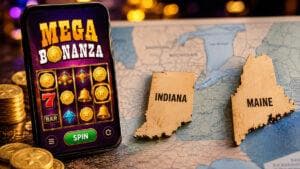
The sweepstakes industry came close. If even two of those 68 House votes had broken differently, the override would have failed and SB 1589 would have been dead. Instead, Oklahoma became the third state to formally ban sweepstakes casinos through legislation in 2026, joining Indiana and Maine, both of which saw their respective bans signed directly by the governor.
What The Ban Actually Covers — And What It Doesn't
In plain terms, SB 1589 targets the Gold Coins and Sweeps Coins model that every major sweepstakes casino uses. The law defines “online casino games” as any internet-accessible game, playable via phone, computer, tablet, or smartwatch, that runs on a dual-currency system where players can exchange virtual credits for prizes, cash, or cash equivalents. If that describes your platform, the law covers it.
What makes SB 1589 more expansive than typical bans is its reach beyond operators. Criminal liability under the law extends to payment processors, geolocation providers, gaming suppliers, platform providers, and media affiliates. The entire supply chain that keeps sweepstakes casinos running is exposed, not just the operators themselves.
Violations carry a Class C2 felony charge, with fines ranging from $500 to $2,000 and potential imprisonment. Those stakes make quiet non-compliance far less viable than it has been in some other states where enforcement action remains civil.
Two categories are exempt. Tribal gaming conducted under the Indian Gaming Regulatory Act (IGRA) on tribal lands is excluded. Charitable gaming under the Oklahoma Charity Games Act, covering nonprofit bingo and raffles, is also unaffected.
No platform is operating illegally today. The November 1, 2026 effective date gives operators a runway to wind down access or exit the state.
Keep Watching: The Exit Timeline Starts Now
Oklahoma sweepstakes players have until November 1, 2026. We will update this piece as platforms announce their exit timelines. For a full, current picture of where sweepstakes casinos are still legal and which states remain open for the foreseeable future, our sweepstakes casino guide covers it all.