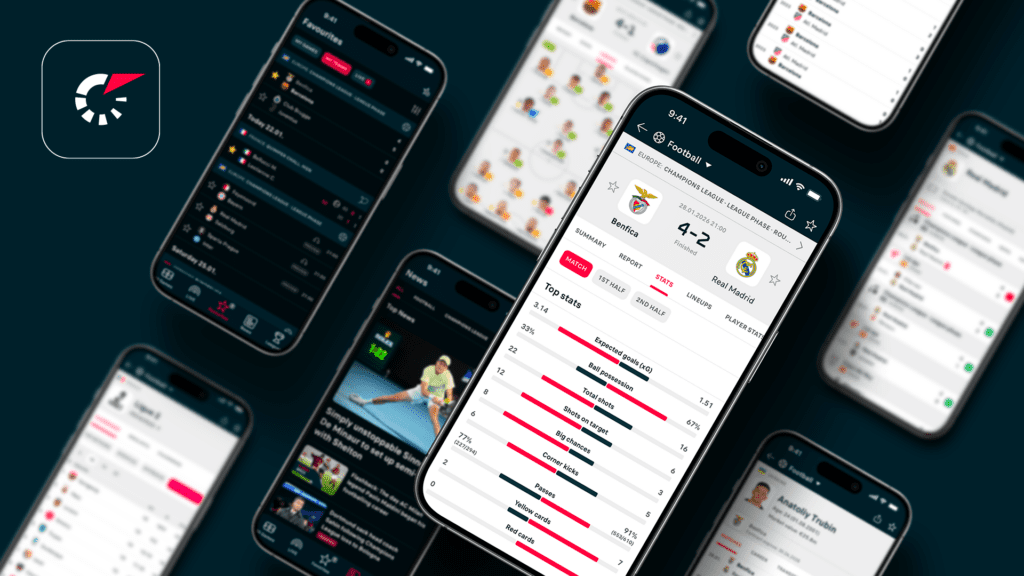
Flashscore has published new audience data showing the scale of global digital engagement generated by a dramatic night of UEFA Champions League action, with almost 34 million users accessing its platform during the final matchday of the league format. The figures highlight how major football events continue to drive large, simultaneous audiences across sports media platforms that sit adjacent to the igaming ecosystem.
According to Flashscore, engagement peaked during a schedule that saw 18 matches played at the same time, creating sustained traffic as fans followed multiple fixtures in parallel. The company reported activity from users across 239 countries and territories, underlining the global reach of elite European football and its relevance to igaming audiences that increasingly consume live data, statistics and match events in real time.
The most-followed fixture of the night was the Champions League match at Lisbon’s Estádio da Luz, where nearly 10 million users tracked Benfica’s 4–2 victory over Real Madrid. The game drew particular attention after Benfica goalkeeper Anatoliy Trubin scored a stoppage-time header in the 98th minute, a rare event that drove a surge in live match views. Barcelona’s 4–1 win over FC Copenhagen also attracted significant attention, with more than eight million users following the match as the Spanish side secured direct qualification to the round of 16. Napoli’s home defeat to Chelsea, a 3–2 result that eliminated the Italian club, was followed by close to six million users, reflecting continued interest in tightly contested knockout outcomes.
Individual player pages also saw notable traffic during the evening. Flashscore data showed close to one million users viewing Jorginho’s profile after the midfielder scored a penalty against his former club Arsenal. Trubin’s profile activity increased sharply following his late goal, while Andreas Schjelderup’s performance for Benfica and Kylian Mbappé’s goals for Real Madrid generated hundreds of thousands of profile views, illustrating how standout moments translate quickly into digital engagement.
At team level, Real Madrid recorded the highest number of user interactions despite defeat, as interest spiked around the club’s unexpected drop into the playoff round. Benfica followed closely as the second most-viewed team, while Barcelona ranked third after progressing comfortably. These patterns reflect how both success and failure at major tournaments can drive comparable levels of attention across sports content platforms linked to igaming audiences.
Geographically, Brazil emerged as the single most active country on the platform during the night, while strong engagement was also recorded across Europe, Africa and Asia. Flashscore reported particularly high activity in countries including Italy, France, Poland, the United Kingdom, Spain, Portugal and Germany, alongside significant usage in Nigeria, Ghana and Ivory Coast. User activity was also logged in markets such as Indonesia, Kazakhstan, South Korea and Uzbekistan, as well as in remote locations including Antarctica and Christmas Island.
The data underlines the continued importance of major football tournaments in generating large-scale, real-time engagement, reinforcing the role of live sports data platforms within the broader igaming landscape, where immediacy, global reach and simultaneous consumption remain key drivers of user behaviour.
Martin Matejka, Marketing Director of Flashscore, said: “Yesterday wasn’t just a matchday; it was a global event and we were well prepared. When game-changing moments decide matches – from a goalkeeper’s stoppage-time header against Real Madrid to last-minute winners across Europe – the world doesn’t just watch, it reacts. Flashscore sent out over 700 million push notifications to our users as drama unfolded across the continent.
“Our data shows unprecedented engagement from all over the world, and I am glad we could bring these extraordinary moments to fans from Brazil to Antarctica.”
- Spinomenal Adds Majestic Joker to its Classics Series
- Comparasino Rolls Out UX Overhaul and Updated Member Zone
- Gamblers Connect Unveils iHub for the iGaming Industry
- SlotMatrix Brings Fiesta-Fuelled Excitement with Muertos Fortune
- WSF Odds Expands Football Performance Offer with New First Team Markets
- Esportes da Sorte sponsors FIFA World Cup 2026 broadcasts on SBT and N Sports