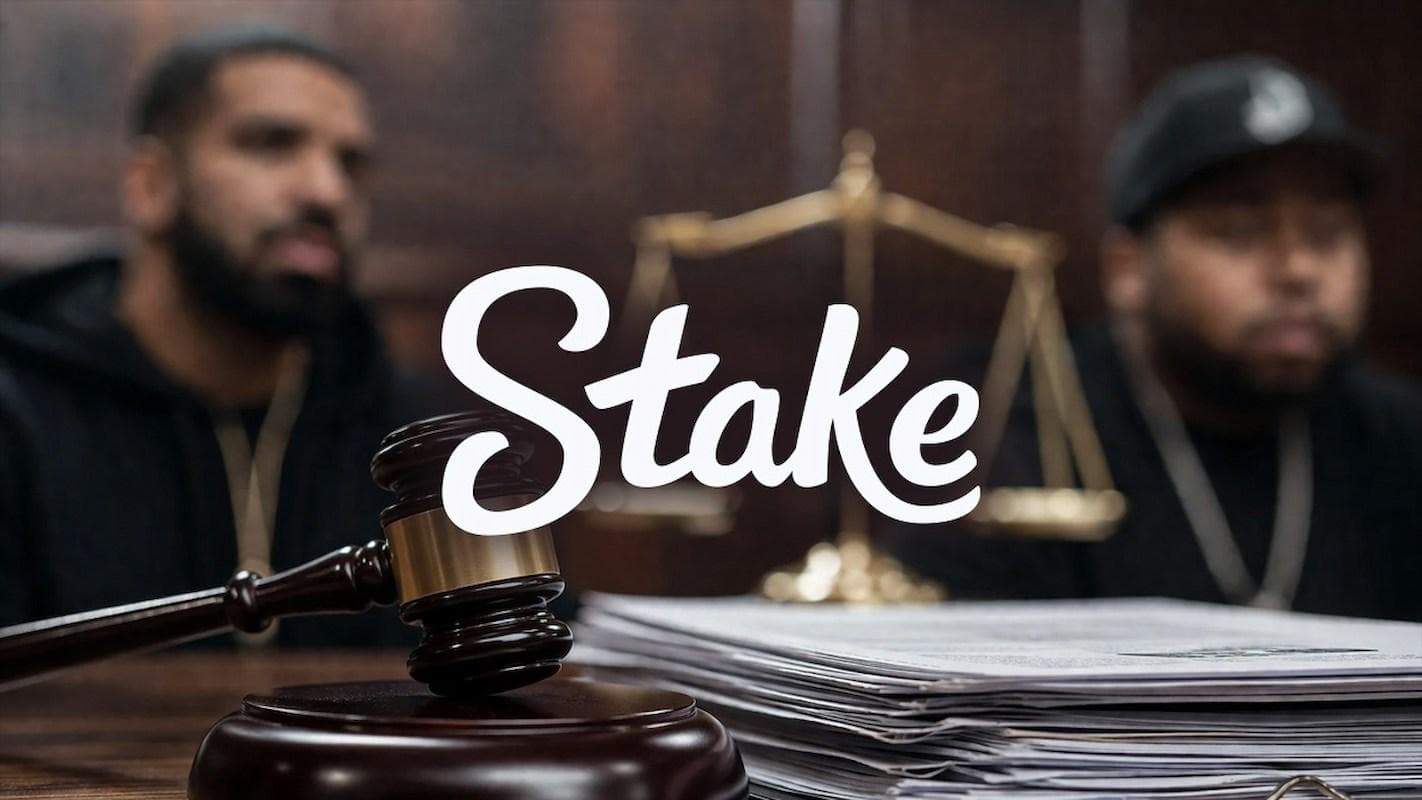
If you ever signed up to Stake after watching Drake, Adin Ross, or DJ Akademiks play on stream, a new lawsuit filed in New Jersey says you may have been watching a performance, not a gamble.
The Drake Stake lawsuit 2026 now spans four US states. On April 22, a New Jersey player named Jason Nufio filed a consumer class action in Monmouth County Superior Court, naming Drake, Adin Ross, DJ Akademiks, George Nguyen, Stake, and streaming platform Kick as defendants. The complaint, filed by Impresa Legal Group, alleges illegal gambling, racketeering, and a coordinated scheme to defraud New Jersey players. None of the allegations has been proven in court.


What the Lawsuit Actually Says
The central claim in the NJ filing is straightforward: according to the lawsuit, Drake, Ross, and Akademiks promoted Stake to their audiences without disclosing that they were paid to do so and without revealing that they were playing with funds provided by Stake rather than their own.
The court documents allege that ads for Stake concealed the fact that Drake and Ross faced no genuine financial risk, while ordinary players who followed their lead and deposited real money stood to lose it. Any on-stream losses, the lawsuit alleges, were part of a marketing strategy designed to make the platform look appealing, not evidence of real risk.
DJ Akademiks is specifically named for a separate role. According to the filing, Akademiks was allegedly paid through Stake’s tipping feature and used that compensation to promote false narratives about Drake and his music, while knowingly assisting in a scheme to artificially inflate Drake’s streaming numbers through bot networks. Plaintiff Nufio is seeking unspecified damages and a full refund of the money he spent on Stake.
Why New Jersey Specifically-What It Means for Players There
New Jersey passed legislation on August 15, 2025, making it illegal to join or participate in a sweepstakes casino while in the state. That law is the legal foundation that gives Nufio standing to file in New Jersey courts, and it is what shapes who can join the class.
According to the Stake.us illegal gambling New Jersey claim, any New Jersey resident who used Stake after August 15, 2025, and lost money may have potential standing as part of the class. If that describes you, this lawsuit is directly about your situation. This article does not provide legal advice. If you played Stake in New Jersey after that date, you may want to seek independent legal guidance to understand your options.
This Is Not the First Lawsuit: Here’s the Pattern
New Jersey is the fourth state to see a Stake.us player lawsuit. The legal campaign against Drake, Ross, and Stake began in October 2025 and has been escalating ever since.
Missouri was first, with a filing in Jackson County Circuit Court on October 27, 2025, accusing Stake.us of being a clone of the offshore Stake.com platform designed to mislead regulators. New Mexico followed two days later with similar allegations in the Second Judicial District Court. Virginia came next on December 31, 2025, as a federal class action in the Eastern District of Virginia seeking at least $5 million in damages. That filing first introduced the music streaming manipulation angle, which now features prominently in the New Jersey complaint as well.
Stake has denied earlier allegations, with representatives previously describing claims as nonsense. Ross publicly dismissed the Missouri and New Mexico suits. Drake has not publicly commented on the New Jersey filing, though as of publication, Stake is still listed first in his Instagram bio. According to reports citing sources familiar with the arrangement, Drake’s brand ambassador deal with Stake.com is worth approximately $100 million per year.
The Bigger Question for Sweepstakes Players
You do not need to have played Stake for this case to be relevant to you. The core issue it raises applies across the sweepstakes casino space: when a celebrity or influencer is shown playing on stream, are they using their own money?
The lawsuits allege that in Drake and Ross’s case, the answer is no. That does not mean every celebrity casino endorsement lawsuit involves the same arrangement. But it is a useful question to ask before following anyone’s lead into a platform. Understanding whether a promotion is a paid partnership, and whether the person promoting it has real financial skin in the game is worth knowing before you deposit.
The DJ Akademiks Stake lawsuit also introduces a dimension that goes beyond gambling. If the streaming fraud allegations have merit, the implications extend into the music industry and content creator economy as well. That is part of why this case has drawn attention far beyond the sweepstakes casino world.
What Comes Next
We will continue to track all four state lawsuits as they progress toward trial. In the meantime, if you are looking for sweepstakes casinos with transparent bonus terms and straightforward promotional track records, our guide covers what is available in your state and what to look for before you play.