Amid The Scream And Jeopardy Of War, UAE iGaming Gains Momentum
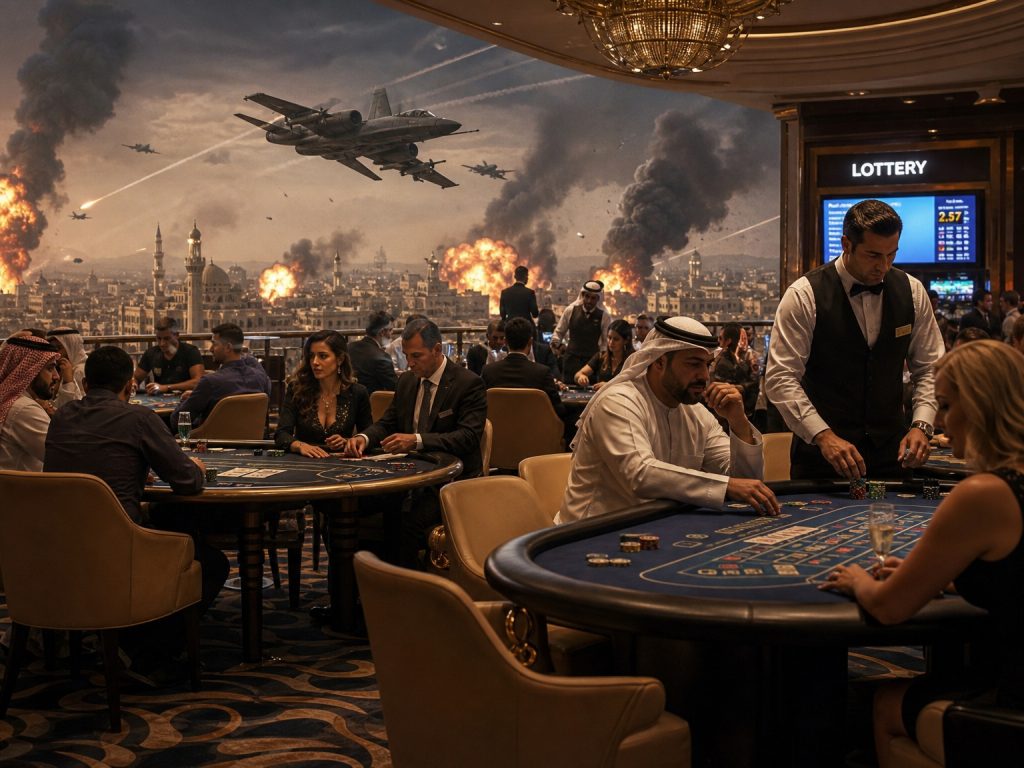
ANALYSIS: Despite the ongoing hostilities between the U.S.-Israel and Iran in the Gulf region, it appears that the UAE seems determined to build the world’s next major regulated gaming market, writes Bayo Nike.
But are investors betting on a market whose risks cannot be measured on a balance sheet?
For Fanatics and Abu Dhabi’s Momentum Group, the answer seems to be a resounding “No!” And they’ve decided to make their move hard and fast.
Their partnership marks one of the first international investments in the UAE’s regulated gaming industry. The opportunity is considerable. But so are the political, cultural and geopolitical questions surrounding it.
U.S. digital sports giant Fanatics finalized a strategic joint venture with Abu Dhabi-based Momentum Group on Monday, June 29, 2026 after receiving approval from the UAE’s General Commercial Gaming Regulatory Authority (GCGRA).
Ground-breaking Agreement
Under the agreement, Fanatics will take operational control of Momentum’s licensed lottery, digital sportsbook and online gaming operations.
Momentum contributes its foundational regional infrastructure including its established lottery operations and the digital test case Play971; while Fanatics integrates its proprietary gaming technology and sports-wagering infrastructure into the joint venture.
The partnership is one of the clearest indications yet that international operators are prepared to commit capital to the UAE’s regulated gaming sector while the market is still in its early stages.
Momentum Group Chief Operating Officer Scott Burton described the agreement as evidence of confidence in the UAE’s regulatory framework, saying the country had built: “one of the world’s most carefully regulated commercial gaming markets.”
Commited To Market
Fanatics President Conor Grant made a similar assessment, and described the UAE: “As one of the most thoughtfully regulated commercial gaming markets in the world”, while confirming the New York City-headquartered company’s long-term commitment to the market.

But, amid the resumption of hot hostilities in the region, with both the USA and Iran trading missile and drone strikes, is now the window for gaming companies to secure a footprint in the Gulf?
On June 1 this year the UAE’s 2025 Federal Decree-Law No. 25 went into effect, officially removing the gambling and betting prohibition chapter from the nation’s Civil Transactions Law.
This replaced decades of civil-code ambiguity with a dedicated, federal-led licensing regime under GCGRA.
The government’s economic strategy also supports investor interest.
Top Tourist Destination
Tourism contributed roughly AED 257.3 billion(£52.7bn/US$70.06bn) to the national GDP in 2024, and this accounts for 13 percent of the total economy, according to the World Travel & Tourism Council.
With 18.72 million international overnight visitors in 2024, the country remains one of the world’s top tourism destinations.
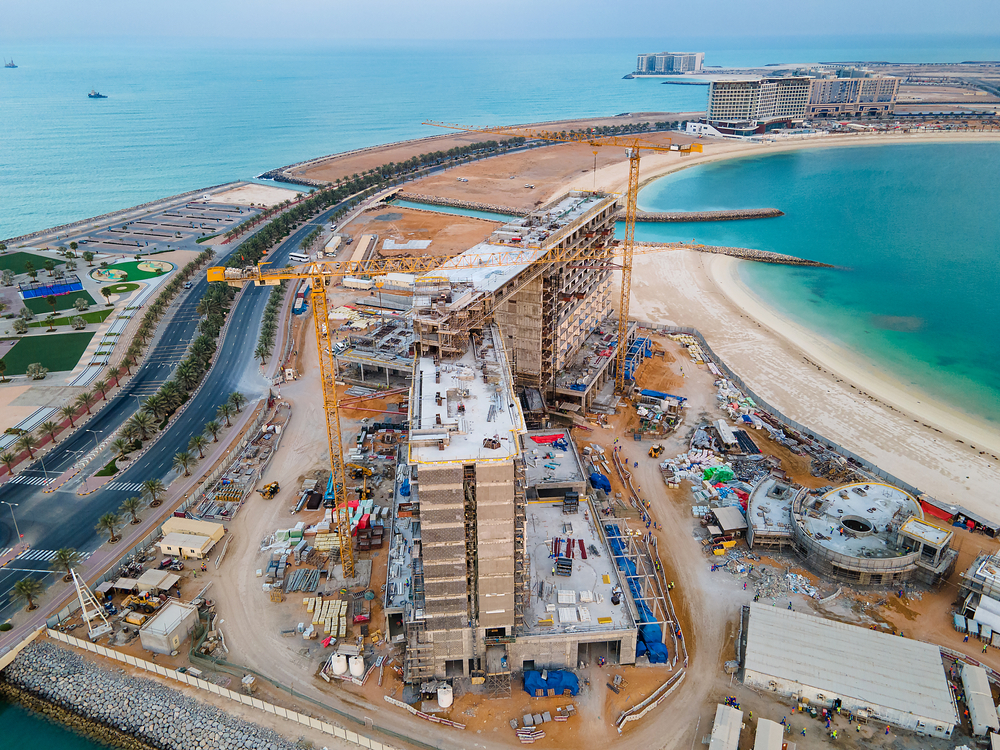
Gaming investment is developing alongside major hospitality projects. Wynn Al Marjan Island, a US$5.1 billion (£3.81bn) integrated resort under construction in Ras Al Khaimah scheduled to open early 2027, is expected to become the UAE’s first property to offer casino gaming under the GCGRA framework.
For companies such as Fanatics, entering early offers advantages. Establishing operations while the market is still developing allows operators to build local partnerships and build brand recognition before competition increases.
Geopolitical Challenges
Yet regulation alone will not determine whether the UAE’s gaming market succeeds.
The most immediate challenge is geopolitics.
The UAE has remained relatively insulated from conflict but it operates in a region that has experienced repeated military escalation, including missile and drone attacks linked to the U.S.-Israel–Iran conflict. And U.S. military sites and commercial airports in the region have been targeted–and hit–by Iran.
Such events disrupt supply chains and influence investor sentiment across the Middle East, even when the UAE itself is not directly affected.
For now, most international businesses continue to distinguish the UAE from wider regional instability.
Faith In Stability
During the Q1 2026 earnings call, Wynn Resorts CEO Craig Billings confirmed a delay in the opening timeline for the Wynn Al Marjan Island mega-resort “due to regional shipping and logistical challenges from nearby conflicts”.

However, addressing these concerns, Billings expressed faith in the UAE’s long-term stability.
“When we underwrote this project, we didn’t underwrite a region with zero geopolitical risk. We underwrote a country with a demonstrated ability to manage through it and to emerge in a better competitive position on the other side,” said Billings.
Culture is yet another challenge.
“Haram”
Under Islamic teaching gambling is considered “haram”, forbidden, and is prohibited across much of the Gulf.
The UAE has not attempted to normalise gambling for its domestic population.
Instead, the government has introduced a regulated commercial gaming framework that focuses on licensing, compliance, consumer protection and responsible gaming. Integrated resorts are also expected to target international tourists rather than local residents.
Whether that approach can reconcile commercial gaming with the UAE’s cultural and religious identity remains one of the market’s biggest unanswered questions.
Beyond Petroleum
Unlike mature gaming markets, the UAE has a relatively small domestic population of around 11 million people, of whom almost 90 percent are expatriates.
The industry’s long-term growth will therefore depend on international tourism rather than local demand.
Operators will have to navigate a regulatory framework that is still evolving as the General Commercial Gaming Regulatory Authority continues to develop licensing standards and compliance requirements.
Across the Gulf, governments are investing in tourism, entertainment and infrastructure to reduce their dependence on oil revenues.
In regional powerhouse Saudi Arabia, for example, the country is growing its tourism and entertainment sectors under its Saudi Vision 2020 project.
Although Saudi Arabia has not moved towards legalising commercial gaming, it is also investing in the gaming industry.
Savvy Move?
The International Trade Administration says Saudi Arabia’s Public Investment Fund, through Savvy Games Group, has committed US$38 billion (£28.45bn) to the sector and has acquired more than US$5 billion (£3.74bn) in stakes in major U.S. gaming companies.
And if the UAE shows that regulated gaming can safely generate massive non-oil revenue without disrupting local culture, it could serve as a blueprint for wider Gulf expansion.
Fanatics and Momentum have made their bet.
Wynn is pressing ahead with its integrated resort. And most international casino-resort heavy-hitters are watching the development closely.
Whether that turns into a thriving gaming market–or a lesson in how difficult expansion can be in a volatile region–will depend on far more than regulation alone.
Politics, public acceptance and regional stability may prove just as important as commercial demand.