
SPECIAL REPORT: North Korea is notoriously cited as one of the most unfree and secretive states in the world.
Little is known about its internal financial dynamics. Experts have described it as an ‘economic black hole’. And at the international level it faces severe sanctions from most of the international community, with the notable exception of China, Russia and Iran.
But–despite an outright ban for all citizens–, the country contains one of the most unusual gambling landscapes in the world – driven by the state’s mercilessly strict ideological regime and hunger for economic survival.
The Asian dictatorial dynasty operates a highly-selective and strategically-controlled approach that allows limited forms of gambling activity to exist, and uses betting as a primary tool for generating funds from foreign markets to funnel and underwrite much of its disruptive foreign policy.
Forbidden at Home, Encouraged for Foreigners
For the 27 million citizens of North Korea gambling is strictly forbidden.
All forms of gambling—including sports betting, lotteries, and informal wagering—are totally banned.
The ‘communist’ state frames gambling as a “capitalist vice” that is wholly incompatible with North Korea’s ideological system of governance.
But the picture changes entirely for foreign visitors.
There are only two casinos in North Korea: The Yangkaddo Hotel in the country’s capital, Pyongyang, and Imperial Hotels and Casinos, located in Rason, the nation’s only ‘free economic zone’.
These curious venues cater only to tourists and overseas business visitors, most of them from neighbouring China, which has been North Korea’s principal lifeline and long-term supporter since the Korean War, 1950-53.
The casinos are designed purely for revenue extraction, allowing current Supreme Leader “Rocketman” Kim Jong Un, grandson of regime founder Kim Il Sung, to tap into international gambling demand whilst maintaining a hard internal ideological line.
The Chongryon Connection and Japan’s Pachinko Economy
Beyond its borders, North Korea’s relationship with gambling becomes even more complex.
A particularly distinctive dimension of its external economic network is its connection to the Chongryon Association.
Historically, Chongryon has provided educational, cultural and financial support for ethnic Koreans in Japan, known as Zainichi Koreans, who migrated to Japan between 1910 and 1945 when the Korean Peninsula, both north and south, was part of that nation’s extensive Far Eastern empire.
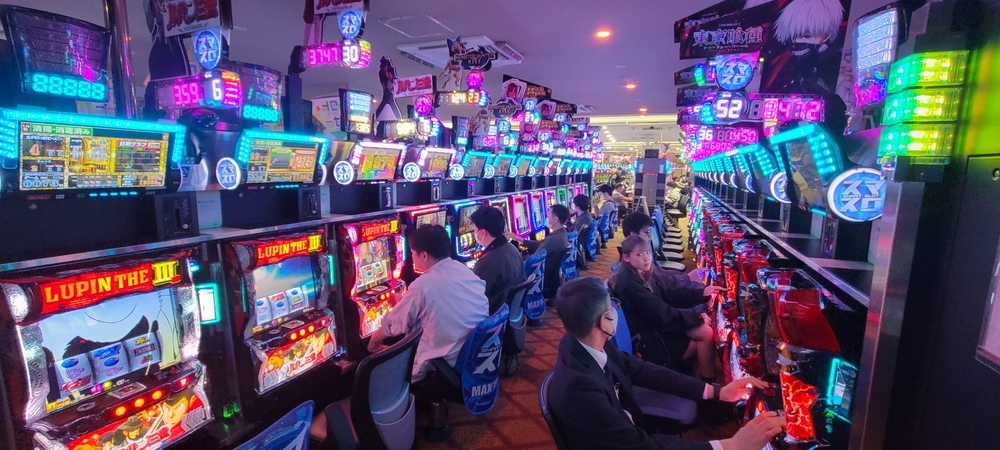
This network has been tied with financial flows linked to the North Korean state, including indirect exposure to Japan’s large pachinko industry.
The vibrant, fast-paced game that is Pachinko–which blends elements of pinball and gambling–operates in a legal grey zone.
And it is one of the largest gambling-adjacent sectors in Japan.
The industry is widely estimated to be worth hundreds of billions of dollars annually.
The combination of diaspora networks and loosely regulated gaming structures has, over time, created opportunities for funds to be channelled across borders in ways that are difficult to fully trace or regulate.
Estimates say that pachinko parlour owners sent hundreds of millions of dollars to North Korea at the industry’s height in the 1990s.
Although the Pachinko industry is now in decline, this historic link is indicative of the length of isolated North Korea’s tentacles in ostensibly “hostile” territory.
Gambling Revenue Circumvents International Sanctions
For years North Korea has been repeatedly linked to the use of gambling ecosystems in offshore jurisdictions to move and obscure funds.
Casinos in regions like Macau, and other parts of Southeast Asia, have long been cited by experts examining regional money flows tied to illicit finance.
Not only do these activities generate revenue, they also reportedly facilitate laundering mechanisms that help move funds across international financial systems.
Indeed, in its heavily-sanctioned economic context, gambling-related channels provide one of the few flexible tools available for the North Korean state to tap into the sap of the global market.
Korea’s involvement in digital transnational crime is well documented.
Security company Elliptic, reported that the state pulled off the biggest bit-coin heist in history, amassing over US$3 billion (£2.21bn) in 2024 and early 2025.
Both the regulated and illicit iGaming markets are equally significant to its wider geopolitical strategy of looting transnational markets to fund its internal activities.

And this assessment was supported by a 2024 study by the Royal United Services Institute (RUSI), who affirmed the “North Korean state has direct engagement with illicit gambling and gaming-related activities”.
This key revenue stream, the report suggests, contributes directly to funding the country’s foreign policy – including its ballistic missile programme.
RUSI’s report found extensive ties with North Korea to money laundering via Junket groups in Macau – ‘fixers’ for gambling “whales”, who arrange everything, from transport, accommodation and even prostitutes, for players at the China enclave’s casinos.
Equally of note, The Korea Institute of Liberal Democracy in Seoul, South Korea, found that North Korea has generated revenue from the development and sale of online gambling websites.
They argue that the regime has earned an average annual revenue of US$866 million (£640.29m) from 2016 through operating and developing online gambling operations (as well as other unnamed online business).
You can quite literally count North Korea’s allies on one hand: China, Russia, Belarus and Iran.
They are manifestly shunned by the rest of the international community, with trading sanctions from most UN member states, the E.U. and many other significant international institutions.
By leveraging offshore casinos, diaspora-linked financial networks, and controlled domestic prohibition, the regime effectively uses both online and casino-based gambling as a financial tool to circumvent the heavy sanctions they face from the rest of the world.
Contradiction
North Korea’s gambling model is a total contradiction: Domestic prohibition at home with tightly controlled commercialisation for foreigners and an extensive and opaque network of both regulated and illicit industry links abroad.
This pattern is directly reflective of the regime’s broader economic strategy – isolated and heavily controlled but highly adaptive. And ruthlessly willing to exploit globalised industries where regulation is fragmented and many are willing to look the other way.
In the global gaming context, this stands as one of the clearest examples of how North Korea exploits gambing–beyond entertainment and regulated commerce–to underwrite economic survival and geopolitical leverage.