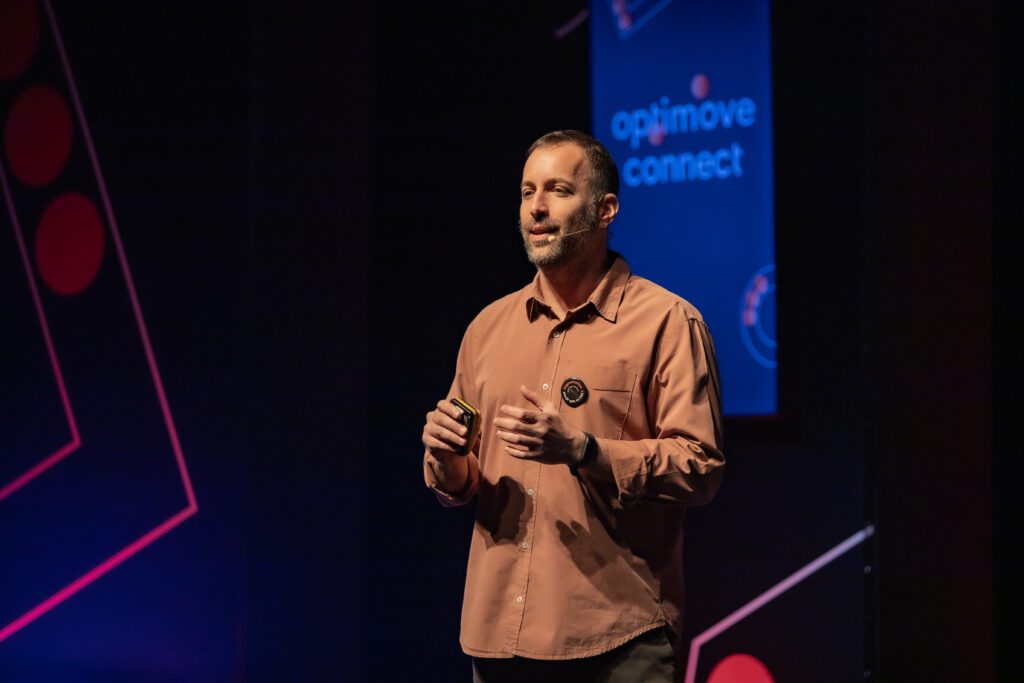
Few names in the iGaming industry resonate quite like Optimove. Founded in 2009 by Pini Yakuel and Shachar Cohen, the company quickly emerged as one of the most innovative in the industry, and by 2012–long before Artificial Intelligence was the buzzword it is today–it became the first CRM marketing platform to embed AI and use it to predict player behaviour, writes Lauren Harrison.
By providing a leading-edge solution for customer retention and relationship marketing, Optimove revolutionised operators’ ability to maximise customer lifetime value, boosting it by an average of 33 percent. And it has now grown into a multi-million dollar business.
In this exclusive interview, iGF Head of Content Curtis Roach speaks with Pini Yakuel, the visionary behind Optimove and its current CEO, about his pioneering use of AI-orchestrated marketing.
We’ll also explore how operators can strike the right balance between acquisition and retention and hear Pini’s top tips on avoiding costly mistakes when integrating AI.
Curtis began by asking Pini:
Acquisition has always been a primary focus for iGaming operators, especially during the impressive growth period the industry has been experiencing in recent years. But is there enough focus on retention? And what are the dangers of not finding the right balance between one’s acquisition and retention activities?
“While acquisition is the road to market share, retention is the road to profit. There are three key advantages to a strong retention strategy.
“First, retention makes acquisition smarter. Think about it: Focusing on retention teaches operators who their players are – embracing everyone, from one-timers to VIPs. With the right tools, like a customer data platform and a multichannel marketing hub, operators can identify and document what truly works to keep players engaged.
“Retention acts as the lab, where strategies are tested and refined to drive loyalty.
“And those insights are gold for acquisition. They inform operators where to spend, and where not to spend to maximise player lifetime value.
“Second, retention fuels sustainable growth. Enticing acquisition campaigns do grab attention and market share, but at what cost? Those acquisition dollars go to waste if operators don’t hold on to high-value players. A solid retention strategy builds a loyal, stable player base that keeps returning and drives long-term value.
“Third, retention becomes critical in uncertain economic times. It costs five times more to acquire a new player than to retain an existing one. When budgets tighten and acquisition costs rise, focusing on retention can ensure operators maximise player lifetime value. That means steady revenue, lower churn, and better ROI.
“Focusing too heavily on player acquisition at the expense of retention can lead to several significant pitfalls. High churn rates are among the most pressing; bringing in new players is only half the job. If they don’t stick around, the effort–and cost–is wasted.
“Acquisition is also expensive. Without retention, you’re spending more for diminishing returns. You risk loyalty as players, who feel undervalued, will go elsewhere. It’s that simple. And then there are missed revenue opportunities. Existing players hold enormous potential – from repeat play to cross-selling. Overfocusing on acquisition leaves this untapped.
“At the end of the day, retention is a lifeline to profitability, loyalty and long-term growth. For operators, the real challenge is finding the right balance between acquisition and retention.”
Leveraging AI-driven tools in iGaming has become extremely popular recently. But not all operators access the full value because of poor system integrations. What can operators do to avoid these issues in the future and get the maximum return on their investments in AI technology?
“AI is the ‘thing du jour.’ As a result, operators are rushing to implement AI and integrate it into their marcom stacks, which could be a big mistake.
“I can tell you that at Optimove, we have rejected at least 10 AI solutions to everyone we have seriously considered. When we integrated AI and genAI, they were thoroughly vetted. After all, we first integrated AI into our platform and solutions in 2012; as we say, ‘before AI was cool’.
“Plus, while AI is a powerful enabler, like any powerful tool, it’s only as effective as the foundation it’s built upon. Poor system integrations are a common stumbling block. Unfortunately, they can limit the ROI on AI investments.
“The key to avoiding these issues is to start with a clear strategy. Operators must approach AI adoption not as a standalone solution, but as part of an integrated ecosystem.
“First, operators need to choose the right tools for the job. They should focus on tools designed to integrate seamlessly into their existing systems. AI solutions that come with robust APIs and flexible architecture are a must. Too often, operators invest in flashy technologies that require costly customisations, or simply don’t play well with their current infrastructure.
“Second, you must make data your foundation. AI lives and breathes data, and if your data isn’t unified and accessible even the best AI won’t deliver.
“Operators must prioritise a centralised, high-quality data layer. That means breaking down silos, investing in robust data pipelines and ensuring data accuracy. Without this foundation, AI can’t deliver meaningful insights or personalised experiences.
“Third, collaboration is key. AI isn’t just a technology challenge – it’s an organisational challenge.
“IT, marketing, product and operations must work together to define goals, processes and workflows.
“The operators who succeed with AI view it as a cross-functional effort, where everyone plays a role in implementation and optimisation.
“Fourth, operators must partner with the right vendor. Not all AI tools are created equal, and not all vendors provide the same level of support. Operators should look for partners who go beyond just delivering software. A great vendor should offer expertise in integration, best practices and ongoing optimisation.
“At Optimove, for example, we don’t just hand over a platform. We work with operators to ensure the solution is fully embedded and delivers value.
“Finally, think long-term and approach AI as a journey, not a quick fix. It’s not just about deploying the tool and hoping for results. It’s about constantly monitoring performance, testing and refining campaigns and staying aligned with evolving business needs.
“In the end, poor integration is worse than not having AI at all. It wastes time, resources and money, and frustrates teams because they’re not seeing the expected results. Worse, it can alienate players with inconsistent or irrelevant experiences, which is the opposite of what AI is supposed to achieve.
“When done right, AI isn’t just a tool, it’s a teammate that empowers operators to work smarter.”
Over the past few years, the iGaming market has become increasingly crowded, causing operators to spend more on bonus incentives to keep players engaged. How can operators combat this trend and keep their acquisition costs low?
“Bonuses and incentives can feel like a quick fix. But, like a drug, they’re hard to quit.
“They often lead to diminishing returns. Players expect more and operators get trapped in a costly cycle. It’s time to redefine marketing generosity as building player trust and connection, rather than spending more.
“To achieve this, operators must harness their data strategically. Creating a single customer view and segmenting players enables targeted campaigns that feel personal and relevant. Predictive modelling can anticipate when a player might churn, allowing for timely, tailored offers. This approach ensures incentives are smart and impactful, maximising ROI while avoiding waste.
“Over-reliance on bonuses risks limiting relationships with players to transactional ones. It ends up eroding margins and escalating acquisition costs.
“Instead, operators should invest in personalisation, seamless player experiences and meaningful engagement.
“Remember: Retention drives sustainable growth. It’s five times more costly to acquire a new player than to retain one.
“By focusing on creating loyalty through smarter, data-driven strategies, operators can reduce costs, deepen connections and differentiate their brand with experiences that truly matter.”
Optimove is renowned for pioneering AI since 2012. How have you seen the application of AI change over the years? And, equally importantly, how will Optimove convert its experience in AI into added value for its customers going forward?
“AI-orchestrated marketing has always been a hallmark of Optimove.
“In 2012, for example, Optimove became the first CRM Marketing Platform to embed AI natively, setting the stage for a transformation in customer engagement and retention marketing.
“Over the past decade, we’ve led the evolution of AI in CRM marketing. It began as a tool for powerful predictive analytics and has since transformed into a force that fundamentally empowers marketers.
“Today AI does much more than help marketers analyse customer behaviour, uncover actionable insights and automate campaigns. It enables marketers to realise their full potential as creative, strategic and analytical leaders.
“At Optimove, our journey with AI has always focused on one thing – empowering the marketer. We believe AI should amplify and complement human capabilities, not replace them.
“That’s why today, AI-driven tools are breaking down the traditional inefficiency of the marketing assembly line with rigidly-defined roles, helping marketers become what we call ´positionless marketers.´ Positionless marketers realise their multipotentiality. They are enabled to harness diverse skills and talents to adapt and excel in a fast-changing industry.
“Looking forward, Optimove will continue to convert its deep experience with AI into tangible value for customers by freeing marketers to focus on strategy.
“AI can handle the heavy lifting – data, testing and optimisation; while marketers can focus on ideation, storytelling and building meaningful connections with their audience.”
Editor’s Note:
“While acquisition is the road to market share, retention is the road to profit.”
In Pini Yakuel’s view, informed by over 15-years of experience in this sector, retention informs acquisition. It is the operator’s testing lab, where they can learn more about consumers and refine which strategies drive loyalty, fuel sustainable growth and create long-term profitability.
While operators can easily get carried away, and spend heavily on acquisition strategies that ultimately lead players to expect more, Pini advocates a smarter-not-harder working philosophy, which leverages AI tools and predictive behavioural modelling to increase player lifetime value, while freeing human resources for more creative, multidisciplinary tasks.
But the road to success is rarely smooth.
And Pini’s insights, which cut through the AI hype, also serve as a cautionary tale for operators against hastily investing in “flashy technologies”, which could become costly, unvetted mistakes.
Instead, Pini believes that operators should think long-term, view AI as a “journey, not a quick fix,” and develop a clear step-by-step strategy.
And, most importantly, it’s key to choose the right tools and vendors to match these needs.
- Missouri Sports Betting Off To A Show-Show Start
- Letter From America 52
- Cryptocasinos Station-to-Station, All Aboard The Blockchain Train
- Getting In On The Football Action: WSF Odds
- Bridging the Gap Between Technology & Compliance: Interview – Bradley Khoury, eCOGRA
- Meet Me At The Crossroads: KPMG Vegas Gaming Guru Rick Arpin Talks To iGF