
As our industry has matured, the role of Affiliates, likewise, has expanded. Today, increasingly their role centres, increasingly, on transparency, education, and informing players about every aspect of gambling.
In a sector where trust is often in short supply, and transparency and communication are crucial, the leading affiliates have become a trusted authority on where and how to play, frequently breaking down complex concepts such as wagering requirements, house edge, and game strategy to help players navigate online games more confidently.
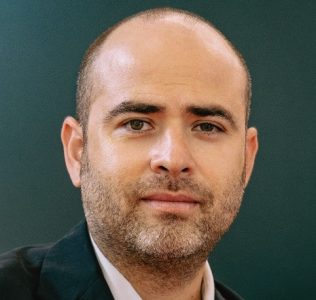
One such affiliate on a mission to educate American gamblers and bust common gambling misconceptions is USA-Casino.com, led by CEO David Zack.
Founded in 2021, USA-Casino.com is operated by a team of gambling industry veterans–including regulatory analysts, journalists, and affiliate experts–, who share a core belief: Informed players are better customers, and that benefits players, operators and affiliates alike.
To find out more, iGamingFuture’s Curtis Roach sat down with David in a recent tête-à-tête.
Curtis began by asking:
As a casino affiliate CEO, why would you want to educate players about optimal Blackjack strategy? Doesn’t that hurt your bottom line?
“That’s the common misconception. Informed players are better customers. Our user surveys show that players who understand basic strategy have more realistic expectations and better bankroll management. They’re less likely to chase losses irrationally or develop problematic gambling patterns.
“When players understand they’re facing a 0.5 percent house edge instead of thinking it’s 50-50, they make more rational decisions about session length and bet sizing.”
You have developed a free Blackjack trainer app. What drove that decision?
“Mathematics is fun!
“We had a fun obsession with knowing whether we made the correct bet or fold at the correct time, based on whatever specific blackjack rules are in play. So that was the genesis of our free online blackjack trainer.
“Interestingly, when recreational casino players use intuitive decision-making, they typically face a house edge of two-to-four percent. With a perfect basic strategy, that drops to 0.5-0.6 percent.
“The mathematics of Blackjack isn’t opinion. It’s a provable fact.
“When you hold 16 against a dealer’s 10, hitting gives you a 23 percent chance of not busting, while standing gives roughly a 23 percent chance of winning if the dealer busts. These are mathematical certainties, not casino marketing.
“Helping players understand the best way to enjoy casino gambling is of benefit for players and affiliates too – as broke players cannot generate revenues!”
What specific rule variations does your trainer cover, and why do they matter?
“The trainer handles all the major variations because optimal strategy changes dramatically with different rules.
“For example:
- 6:5 vs. 3:2 payouts: Switching from traditional 3:2 to 6:5 blackjack payouts more than doubles the house edge – adding about 1.4 per cent.
- Dealer hits soft 17: When the dealer hits on a soft 17 instead of standing, the house edge increases by 0.2 percent, and strategy changes – for example, doubling on 11 against a dealer ace becomes correct.
- Doubling after split: Allowing this rule reduces the house edge by 0.14 per cent, so it encourages more aggressive splits with pairs like twos, threes, sixes, and sevens.
- Surrender option: When used correctly, surrendering can reduce the house edge by 0.6 percent–0.7 percent. Yet most players skip it. Even in clearly losing situations.”
What does your data tell you about how recreational players actually perform?
“The numbers are stark. Only 12 percent of recreational players consistently follow basic strategy.
“Common errors include 67 percent incorrectly standing on soft 18 against dealer nine, 10, or ace, and 84 percent taking insurance despite it carrying a 7.4 percent house edge. And less than 30 percent of players can identify how rule variations affect optimal strategy.
“When players deviate from basic strategy, they’re literally giving the house free money – hitting 12 against dealer six costs about 25 cents per US$100 wagered.”
How does your app actually teach strategy differently than traditional strategy cards?
“In U.S. casinos, blackjack typically has a house edge of around 0.5 percent when basic strategy is employed, meaning the casino expects to keep about 0.5 percent of each bet over the long run.
“The player’s chances of winning a hand are roughly 42 per cent, while the dealer wins about 49 percent of the time, and the remaining nine percent of hands result in a tie.
“Interactive learning beats memorisation.
“The app simulates different rule sets because strategy matrices change significantly between eight-deck versus single-deck games, dealer peek versus no peek rules, and whether re-split aces are allowed.
“And it tracks decision accuracy and provides immediate feedback, letting players internalise correct strategy through repetition rather than trying to memorise charts.”
What can basic strategy actually accomplish, and what are its limits?
“Let’s be clear about what it can and cannot do. Basic strategy minimises mathematical disadvantage, provides an optimal decision framework, and eliminates emotion-based errors.
“But it cannot overcome the house edge entirely, guarantee winning sessions, or replace proper bankroll management.
“Perfect basic strategy gets you to the theoretical minimum house edge–usually 0.43 percent to 0.65 percent, depending on rules. But that’s the mathematical limit without advantage techniques.”
Some critics might say you’re still encouraging gambling. How do you respond?
“People will always gamble; history has already proven that. We’re encouraging mathematical literacy.
“The goal isn’t to eliminate the house edge. That’s mathematically impossible in fair games. The goal is to ensure players understand exactly what they’re facing and make optimal decisions within those constraints.
“We’re replacing folklore with facts, hunches with probabilities. That transparency ultimately serves the interests of everyone.”
What’s your vision for the future of player education in the gambling industry?
“The industry benefits when players approach games with a mathematical understanding rather than superstition.
“Poker’s a great example. Poker solvers can now calculate the game-theory optimal play in nearly every situation, which wasn’t possible in the past.
“Similarly, our educational tools aim to create players who understand their disadvantage. It’s not about eliminating it.
“Players who grasp that they’re fighting a 0.5 percent edge with perfect play, rather than believing they can ‘beat the house’, make more rational decisions about entertainment spending.
“That’s good for everyone. Players enjoy the experience more, and operators build more sustainable relationships with their customers.”
Any final thoughts for recreational Blackjack players?
“Understand the math. Whether through our trainer or another resource, learn the strategy that fits the rules you’re playing.
“Know that perfect play minimises, but doesn’t eliminate the house advantage. It narrows it. Set limits, stick to them, and treat the experience as entertainment with a mathematical cost.
“The house edge is transparent and quantifiable. There’s no mystery or secret system. Armed with that knowledge, you can make the best possible decisions within the game’s mathematical structure.”
Editor’s Note:
David’s message is clear: Educating players via tools like Blackjack trainers does not affect the bottom line because it’s this simple: Informed players are better customers. They bet more rationally, avoid emotion-based errors, manage their bankrolls, and are less likely to chase losses.
In short, they avoid many of the risk factors associated with problem gambling. And that’s exactly the type of player who contributes to a sustainable, responsible and safe industry.
Moreover, according to David, this approach also builds trust by myth-busting common superstitions, or he puts it: “Replacing folklore with facts [and] hunches with probabilities” – a level of transparency that he believes strengthens the industry and “ultimately serves the interests of everyone”.
- Missouri Sports Betting Off To A Show-Show Start
- Letter From America 52
- Cryptocasinos Station-to-Station, All Aboard The Blockchain Train
- Getting In On The Football Action: WSF Odds
- Bridging the Gap Between Technology & Compliance: Interview – Bradley Khoury, eCOGRA
- Meet Me At The Crossroads: KPMG Vegas Gaming Guru Rick Arpin Talks To iGF