
Blask data shows the tournament effect reaching far beyond the countries whose teams actually played.
The 2026 FIFA World Cup opened on 11 June in the United States, Mexico and Canada — the tournament’s first return to the Americas since Brazil 2014 — and matches ran daily through the end of the month. For Latin America, the region with the deepest football culture, June was the real test of what an event of this scale does to iGaming demand.
Non-participants set the pace
Latin America is one of the regions where big football tournaments clearly affect gambling demand. This year, user interest in iGaming (measured by Blask Index) in LatAm countries rose by 7.2% in June compared to May. That may not seem like much, but in 2025, June outpaced May by just 0.2%.
Blask currently tracks 18 of 20 Latin American iGaming markets, excluding Puerto Rico and Cuba. 2 of them, Costa Rica and Bolivia, topped the global ranking by Blask Index growth in June. In both, demand more than doubled month over month (MoM) — even though neither played at the World Cup.
In Bolivia, 17 out of 134 active operators at least doubled their Blask Index in June. Costa Rica had 11 such brands, including the country’s dominant one, DoradoBet.
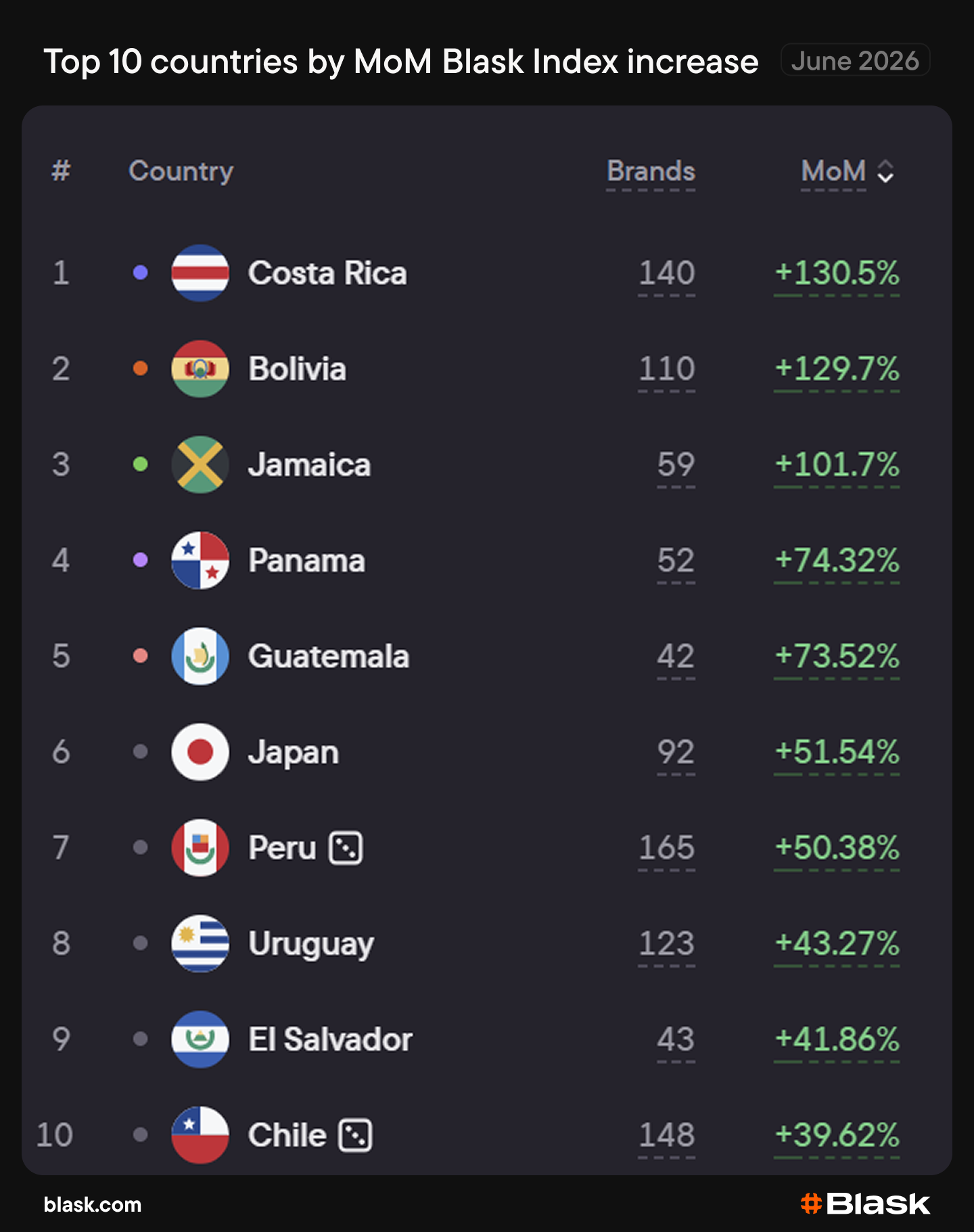
Among the top 10 countries in the world by MoM increase of Blask Index, 8 belong to Latin America. But only two of them — Panama and Uruguay — participated in the World Cup.
Brazil and Colombia move against the field
Latin America was represented in the 2026 FIFA World Cup by 8 countries. The largest of them is Brazil, which accounts for around two-thirds of the total iGaming demand in the region. Surprisingly, Brazil is one of only two LatAm markets where Blask Index fell in June. The 1.5% decrease was driven by licensed brands, while the offshore segment rose by 2.8%.
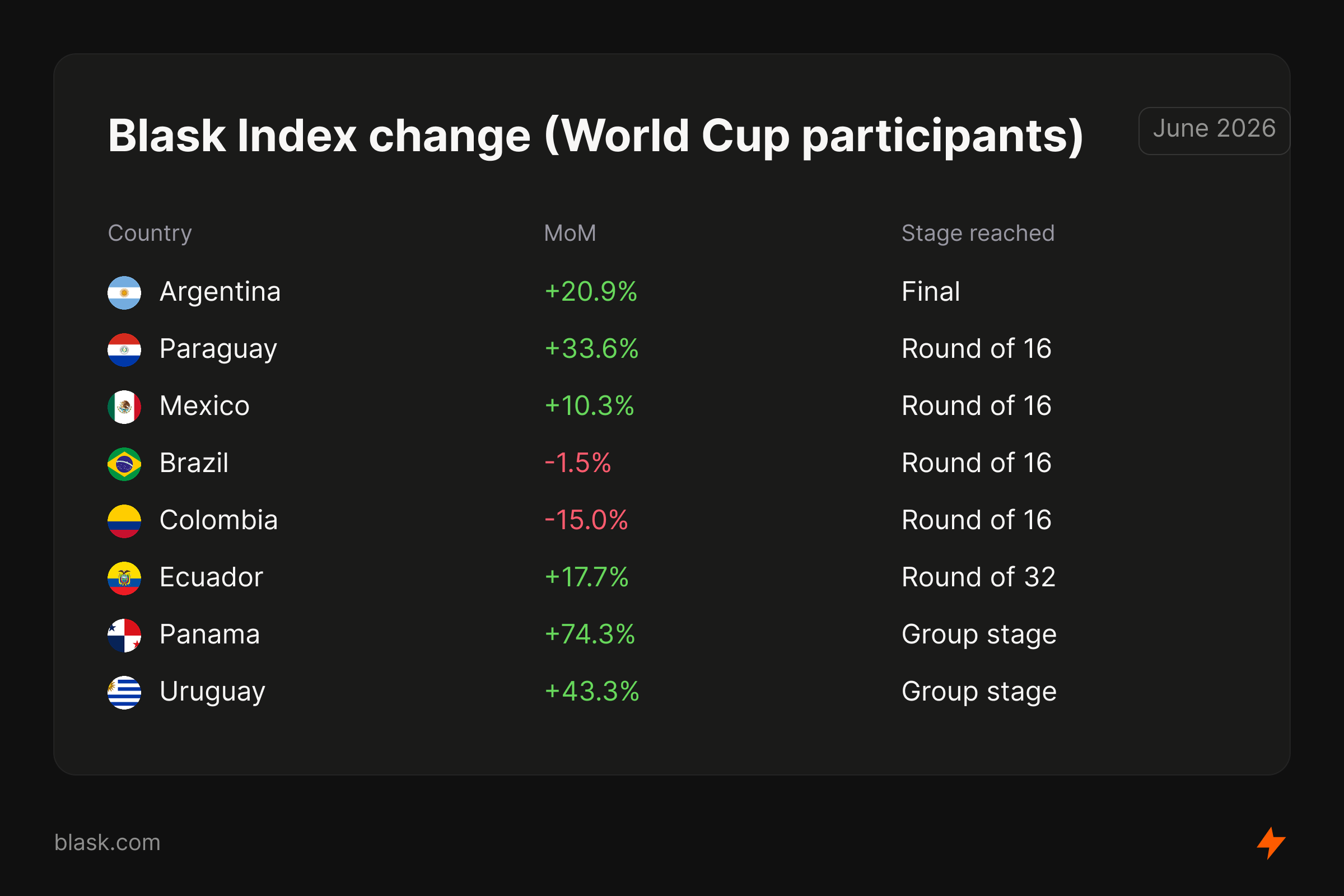
The second country with negative Blask Index change is Colombia. Its Blask Index dropped by 15%, mostly because unlicensed operators lost over half of their demand, while onshore brands fell by 10.2%. Blask Index of the country’s largest brand, BetPlay, which accounts for over half of iGaming demand, lost 46.9%.
The aggregated Blask Index of the other 6 participating countries rose by 20.3%. Among them, the smallest increase was registered in Mexico, one of the World Cup’s host countries. Top 10 brands there showed mixed dynamics as 6 of them lost user demand in June with Bet365 down by 31.3%, while Playdoit posted a 59.4% gain.
Bottom line
The World Cup lifted iGaming demand across Latin America regardless of participation: the strongest growth came from markets whose teams never qualified, while six of the eight that did qualify also grew. The two declines had opposite structures — in Brazil the drop came from licensed brands as offshore rose, in Colombia unlicensed operators lost the most.