It’s been an incredible World Cup so far. From killer comebacks to nail-biting penalty shoot-outs, the tournament has delivered plenty of unforgettable moments, writes Lauren Harrison.
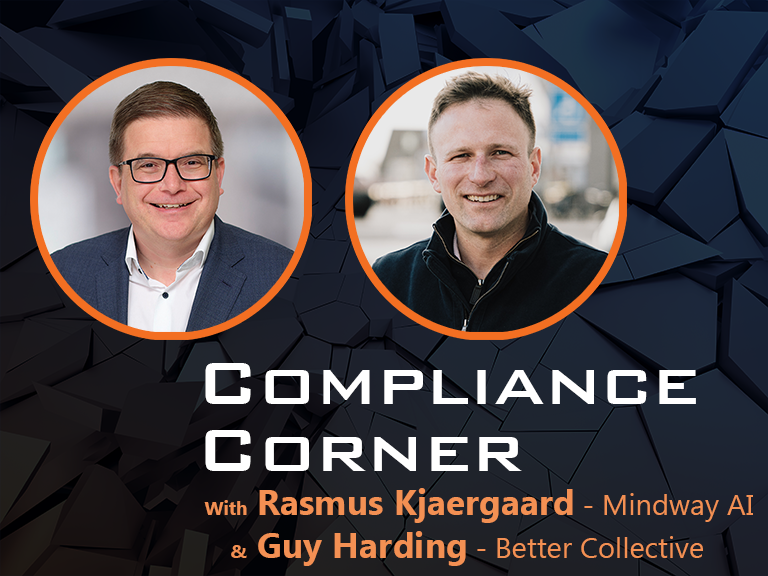
But while most eyes are fixed on the action on the pitch and operators’ key KPIs, Rasmus Kjaergaard, CEO of Mindway AI, and Guy Harding, Senior Director of Business Development at Better Collective, have their sights set on a different goal: Keeping bettors safe.
Speaking exclusively with iGF’s Head of Content, Curtis Roach, Rasmus and Guy discuss the side of the FIFA World Cup nobody is talking about: Player Safety.
From the shortcomings of traditional responsible gambling (RG) strategies, to the future of RG integration in the consumer journey and the thinking behind Gamalyze’s World Cup reskin, this conversation explores football’s biggest tournament from a different angle.
Read on.
As major sporting events like the FIFA World Cup 2026 drive huge volumes of new player registrations, operators often struggle to identify which players may be at risk before harmful behaviours emerge. How can tools like Gamalyze Sports help operators move from reactive intervention to proactive player protection?
RK: “For us at Mindway AI, the real innovation is not identifying gambling harm earlier – this is just part of our wider vision to help prevent it altogether.
“During major events like the World Cup, millions of people engage with sports betting, many without a clear understanding of their own risk tendencies.
“Gamalyze Sports gives players an engaging, science-based way to gain insight into their decision-making and risk tolerance before problematic behaviours develop.
“By creating greater self-awareness and providing personalised feedback, we can help players make more informed choices from day one. We believe that informed players are better protected players.”
Traditional responsible gambling questionnaires often suffer from low engagement and poor completion rates. Why do you believe gamification and behavioural interaction can deliver more meaningful insights than conventional self-assessment methods? And what does this mean for operators moving forward?
GH: “The reality is very few people enjoy questionnaires or surveys, yet they are everywhere.
“How was your Uber ride? Was your takeaway warm? Out of 10, how would you rate the cleanliness of our lobby? It’s no wonder we become apathetic to this sort of questioning.
“Unlike traditional self-assessment tests that rely on users answering questions, Gamalyze turns the testing process into an interactive online game.
“The outcome delivers more meaningful insights because it is based on users’ behavioural choices, rather than their self-reported answers. While Gamalyze’s gamification isn’t a perfect substitute for real-world revealed preference, it’s a lot more meaningful than responding to a questionnaire.
“For the World Cup, we decided to reskin the Gamalyze offering so that it’s contextual. And it’s been a game changer.
“The mechanics are the same, so that statistically significant inferences can be drawn, but crucially it appeals to an audience who may only bet on sports and who may therefore have previously been alienated by the old version, which was a card game.
“I really look forward to seeing the results and traction it gets on the many Better Collective sites where it was deployed ahead of the World Cup.”
Sports bettors engage with products very differently from casino players. What specific pain points does Gamalyze Sports aim to solve for operators managing large sportsbook audiences, particularly during high-traffic events such as the World Cup?
RK: “One of the biggest challenges in sports betting is that traditional player-focused responsible gambling tools often don’t resonate with sports fans.
“During major events like the World Cup, operators see huge spikes in betting, much of which comes from recreational bettors. Unfortunately, engagement with conventional self-assessment questionnaires remains low even during these periods.
“Gamalyze Sports solves that by speaking the language of sports fans in a very engaging way. By embedding science-backed risk assessment into an interactive, football-themed, gamified experience, we make player protection more engaging, more relevant and ultimately more effective with a less biased outcome.
“The goal is simple: Help players better understand their own decision-making and risk tendencies, and at the same time provide them with specific advice about what to be aware of based on their tracked behaviour.”
Do you believe responsible gambling tools will increasingly become part of the player experience itself rather than a standalone compliance function? How could this shift help operators create safer, more sustainable and more engaging customer journeys in the years ahead?
GH: “Yes, but I think we’re already there in some markets. I view RG tools like seat belts: They shouldn’t restrict the fun of sports betting, but they should prevent serious harm.
“If we are overzealous with regulation–whether that’s max stake sizes or onerous affordability checks and so on–we will merely drive betting to the black market, where safeguards don’t exist.
“Instead, operators should focus on tools that genuinely help customers, such as net deposit limits, easy-to-access profit and loss trackers and frictionless risk assessments.
“We’re already seeing safer gambling become embedded into the wider player experience.
“In my view, some of the biggest gains come when product improvements also deliver safer gambling benefits.
“Instant withdrawals are a good example. They have effectively replaced reverse withdrawals, which allowed customers to cancel a pending withdrawal and continue gambling.
“Research showed that reverse withdrawals were particularly detrimental to people experiencing gambling-related harm, so removing that functionality has been a significant positive.”
Editor’s Note:
Gamification is often viewed as a buzzword and an engagement tool that every operator needs. What is less discussed is its potential to increase the uptake of RG tools.
Meanwhile, much of the operator-led World Cup discussion has focused on the surge in first-time and casual bettors, with far less attention paid to how those bettors are introduced to responsible gambling in a way that feels engaging rather than creating unnecessary friction.
The Gamalyze goal is simple: Make consumers aware of their behaviour so they can make more informed choices based on a better understanding of their risk profile. Importantly, it flips the script, putting consumers in charge.
With the World Cup final just days away, this interview is a timely reminder that while operators may be focused primarily on financial KPIs, the tournament also presents a prime opportunity to embed responsible gambling tools into the wider customer experience in a way that genuinely resonates with a new cohort of sports bettors.