Beyond Kenya: iGaming East Africa’s Next Big Story

Higher betting taxes, new licensing rules and tougher oversight are changing the shape of East Africa’s biggest gambling market. After years of focusing on Kenya, operators are beginning to look elsewhere as neighbouring countries develop their own regulated betting markets, writes Tooni Wale.
Kenya still generates about KSh200 billion (£1.15bn/US$1.54bn) in annual betting revenue, hence its title as East Africa’s largest regulated betting market.
But Tanzania, Uganda and Zambia are each following different paths that could reshape where future investment goes.
A Changing Market
Kenya did not become East Africa’s biggest betting market by chance.
Widespread mobile money adoption with the official launch of M-Pesa in 2007 and over 80 percent smartphone penetration made online betting grow faster than in neighbouring markets. Local brands such as SportPesa, Betika and Odibets built large customer bases, while international operators also entered the market.
But Kenya’s betting industry has now become more expensive to operate. And through changes to the Betting, Lotteries and Gaming Act–and successive Finance Acts–, the government has increased taxes and tightened oversight.
The Kenya Revenue Authority collected KSh31 billion (£178m/US$230m) from the betting and gaming sector during the 2024/25 financial year.
Operators currently pay a 15 percent betting tax on Gross Gaming Revenue (GGR), while players pay a 20 percent withholding tax on winnings. The 2026 Finance Act also introduced tax on withdrawals from betting accounts, which has raised the cost of doing business.
Defending the regulatory approach, Peter Karimi, Director General of the Gambling Regulatory Authority (GRA) of Kenya, speaking at the inaugural iGaming AFRIKA Summit on May 04, 2026, said: “Effective regulation is not the enemy of growth. It is the foundation upon which sustainable growth is built.”
Karimi stressed that regulators must also create frameworks that protect players while attracting legitimate operators.
Neighbouring markets are expanding their gambling sectors with distinct regulatory strategies.
And instead of competing directly, countries are building different ecosystems to attract international investment.
Tanzania
Tanzania introduced its modern gaming regulatory framework on July 1, 2003 with the implementation of the Gaming Act, which established the Gaming Board of Tanzania.
The government also introduced a five percent excise duty on betting stakes through the Finance Act 2026, which took effect at the start of this month (July 1).
Even with these regulatory strategies, revenue contributions from the gaming industry have been on the increase as gaming companies pull in investments.
Gaming Board of Tanzania Director General James Mbalwe had this to say about the growth: “The improved business environment has led to the gaming industry attracting more investments, leading to the sector [contributing more] to economic growth.”
Tighter controls and technological innovation that has spurred online casino and sports betting has also boosted tax collections, reasoned Mbalwe.
Uganda
In Uganda, Parliament recently passed the Lotteries and Gaming (Amendment) Act 2026 alongside the Income Tax (Amendment) Act 2026, also taking effect on the first day of this month.
The reforms streamlined the previous two-tier system with a single 30 percent tax on gaming revenue, calculated as total wagers minus player payouts.
Regulation in the nation, often called “The Pearl of Africa”, is also extending beyond taxation.
Speaking at the SiGMA Africa Summit on March 11 this year, Denis Mudene Ngabirano, Chief Executive Officer of Uganda’s National Lotteries and Gaming Regulatory Board, said unlicensed offshore operators remain one of the country regulator’s biggest challenges.
“We follow the money,” said Ngabirano, explaining that the regulator works with the Central Bank, payment providers and the Uganda Communications Commission to identify illegal operators and block payment channels.
He added that enforcement is matched with engagement.
“Operators are encouraged to obtain licences rather than continue operating outside the law,” affirmed Ngabirano.
Today, a noticeable shift can be seen across the wider East Africa region.
Regulators are no longer focused just on collecting taxes. They are also strengthening licensing, payment oversight and consumer protection.
Zambia
In Zambia, for example, the government has overhauled gambling laws with the introduction of the Gambling Control Act, 2025, which came into force on August 26, 2025.
The legislation replaced the country’s previous regulatory framework and established the Gambling Regulatory Authority as the national regulator for land-based and online gambling.
Sports betting remains the largest segment of Zambia’s regulated gambling market.
The regulatory changes have coincided with continued growth in digital betting services and mobile payments. For regulators, the focus has been on bringing more gambling activity under a single licensing and compliance framework, and this change has cemented that.
Mobile Money Payments
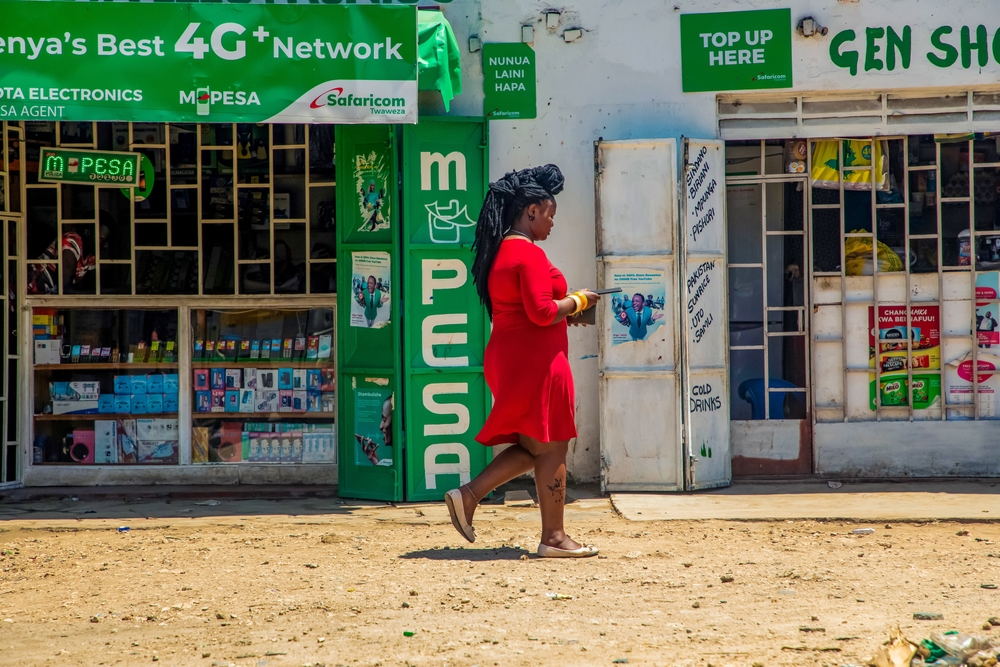
Since M-Pesa launched in Kenya in March 2007, mobile money has changed digital payments across East Africa – and tranformed the betting industry.
Today, operators in Kenya, Tanzania, Uganda and Zambia support services such as M-Pesa, Airtel Money and MTN MoMo for deposits and withdrawals.

According to the Global System for Mobile Communications Association (GSMA), Sub-Saharan Africa remains the world’s largest mobile money market.
The region processes around US$1.4 trillion (£1.04tn) in transactions every year.
And across Africa most licensed gambling operators now integrate one or more mobile money services into their payment systems.
Denis Mudene Ngabirano described mobile money as central to Uganda’s betting ecosystem.
“I think it has made it easier. I would say 99 percent of our gaming is through mobile money,” said Ngabirano, adding that the system has benefited both operators and regulators because transactions are easier to monitor and trace.
Looking Ahead
The next phase of East Africa’s betting industry will be shaped as much by regulation as consumer demand.
Governments across the region are updating tax policies, licensing rules and compliance requirements, while operators adjust to those changes.
The result is a market that is evolving in different directions.
Some jurisdictions are tightening oversight, while others are expanding regulated betting under new legal frameworks.
How those policies develop over the next few years will determine where operators choose to invest.