

Under Muslim holy “Sharia” law gambling is expressly forbidden or “haram”. But in April 2027 the oil-rich United Arab Emirates (UAE) will open their first casino. And not just any casino.
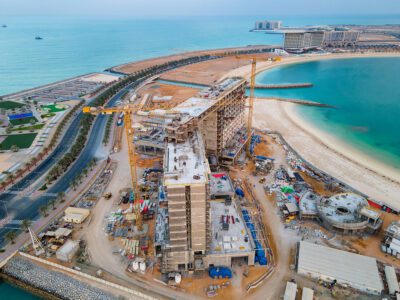
Already dubbed an ‘alternative Dubai’, Al Marjan Island in the Ras Al-Khaimah Emirate will house a huge US$5.1 billion (£3.78bn) Integrated Resort built and operated by Nevada’s giant Wynn Resorts – the first of its kind in the monied Gulf States.
Following the recent legalisation of iGaming websites, with online platform Play971 launched in late November last year, and the official national lottery also opening in 2024, the UAE’s foray into the world of regulated gambling exposes a crucial contradiction.
One that can be expressed as between haram and hospitality – a new-found embrace of gambling revenue from tourists, expats and elites and the religious and legal prohibitions that define regional cultural tradition.
Heading the legalisation of gambling in the state is the General Commercial Gaming Regulatory Authority (GCGRA) established in September 2023 and headed by a board of mainly-American, major gaming industry players; including Mark Lipparelli, a former Nevada State Senator and Chair of the Nevada Gaming Control Board and present Chair of Galaxy Gaming Inc. of Vegas.
Broader Strategy
This shift reflects a broader strategy of selective liberalisation in the UAE, where economic openness is expanded without corresponding political reform, a model some describe as authoritarian liberalism.
Enabled by a legal system that blends Sharia principles with secular-civil and commercial law, the state has been able to relax religiously-grounded restrictions in sectors deemed economically strategic.
Over the past five-years, this has translated into sweeping social and regulatory changes while conservative norms and political authority remain firmly intact, including the liberalisation of alcohol laws, nightlife, premarital cohabitation for expatriates.
And, now, gambling.
With Wynn’s Al Marjan integrated resort forecast to raise colossal annual revenues of around US$1.6 billion (£2.13bn), and pay a blended tax rate of 10-12 percent of GGR, religious restraint proves highly negotiable.
Political Power
Yet by most political metrics, the UAE nevertheless remains an authoritarian state.
Political power is tightly concentrated in the hands of the hereditary rulers of its seven emirates, who collectively form the Federal Supreme Council and exert the highest executive authority. Any limited representative institutions serve largely advisory roles rather than genuine political pluralism.
It also has the largest migrant population of any country in the world.
Estimates place Emirati nationals at just 11 percent of the 11.4 million population, and the economy is completely reliant on migrant and expatriate labour, underpinned by foreign capital.
In short, ordinary citizens have no influence over social or economic policy.
Together, the skewed population and centralized authority allow the state to pursue selective liberalisation: Expanding revenue opportunities and global kudos while keeping the social and cultural impact limited, with little-to-no repercussions from the local population.
Paris of The East
Though no such statement has been publicly made, it is widely expected that local Emiratis–and other Muslim migrants–will be banned from gaming in the casino. Similarly, only non-Muslim expats are permitted to use Play971, which is currently only available in Abu Dhabi and Ras Al Khaimah.
What is being legalised then is not gambling as a social activity, but gambling as a spatially-bound economic function.
Al Marjan Island will set the precedent of a new foreign-run leisure economy, regulated by the state, consumed by outsiders, and built by the country’s numerous labouring migrants.
Gambling has long existed in the region. But it’s heavily restricted.
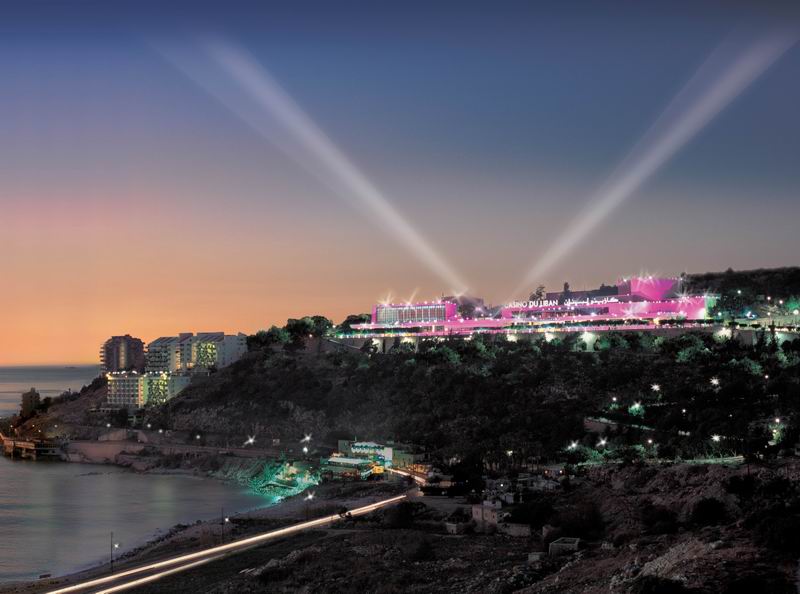
The first Middle Eastern casino opened its doors in Lebanon in 1959–then glamorously labelled “The Paris of the East” and still, despite decades of civil strife, considered the most liberal Arab state–with Casino du Liban, which to this day has express industry monopoly granted by the state, in exchange for a 50 percent tax of their profits.
Monopoly
This monopoly extends to its iGaming arm, BetArabia, launched in 2023.
Further afield, in Egypt, casinos also exist to fuel the country’s large tourist economy, but citizens are banned from using the facilities, with rigorous passport checks conducted at the door.

Many of the local elite, blessed with the privilege of dual citizenship, still choose to play, their second passports allowing them to easily circumvent the rules. No regulated iGaming platforms exist either. But, like in other nations that face the same restrictions, users can simply use VPNs to bypass this.
Selective, foreign-facing gambling then can be broadly seen as a regional pattern in the Middle East and North Africa region – and not unique to the UAE.
Yet, no other venture in the region has seen the gargantuan profits that are expected to be generated at Al Marjan.
The integrated resort will house 174 luxury suites, 24 restaurants, beach bars and even a nightclub.
Luxury
With all seven Emirates set to be granted a license for a singular casino venue, as well as a license for a singular iGaming platform, the country will see an explosion of profitability so great it could become a direct competitor of Macau, say some observers.
Now, for example, gambling giants MGM are also awaiting the greenlight for their own proposed huge beach front IR in Dubai.
In the UAE, gambling will be legal, profitable and–if six more 280m high rises like Wynn’s tower on Al Marjan follow across the country–highly visible.
But it will exist as an economic instrument for rich tourists, expats and global elites rather than a socially-normalised pastime amongst Emiratis.
Gambling’s entrance to the UAE lays bare a two-tier economy: A foreign-facing world of luxury designed for expatriates and global elites, and a voiceless local minority.
Crucially, it also demonstrates the sheer scale and profitability of a gambling industry so lucrative that even conservative states which deem it culturally sinful will accommodate it.
Haram or no haram.