
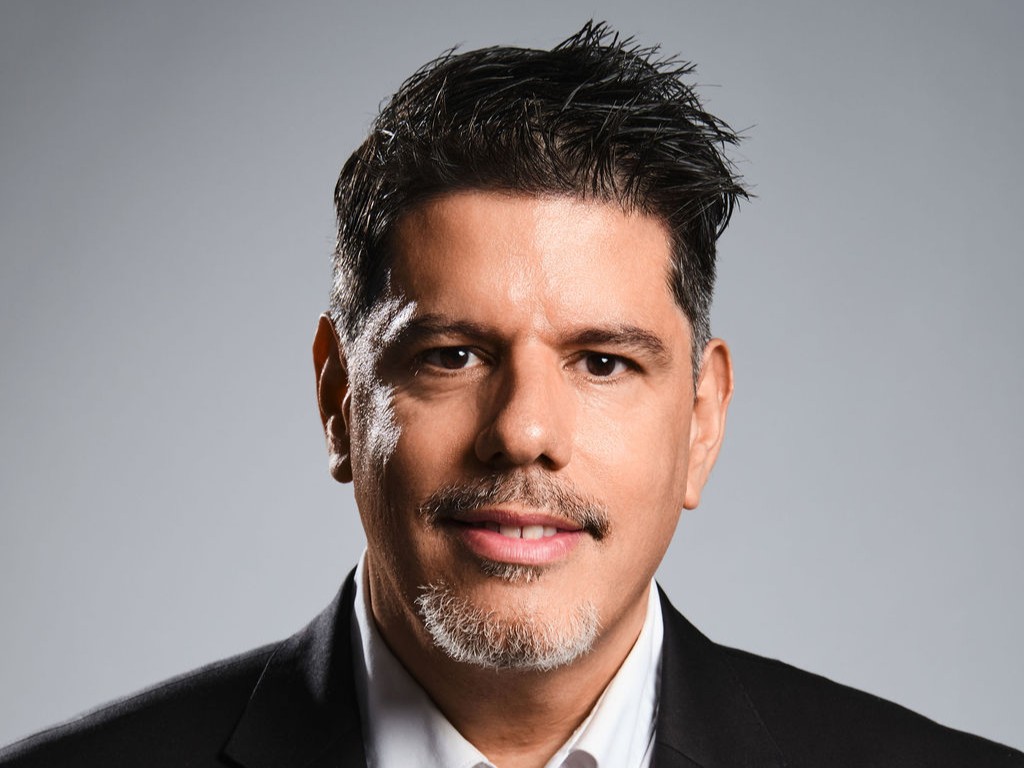
Welcome back to iGF’s exclusive deep-dive into Chile’s incoming online gambling regulations with the Founder and Managing Director of Atucha Strategic Advisory (ASA), Ramiro Atucha, writes Lauren Harrison.
In Part One, we discussed the unique challenges the new regulatory framework could create – from punitive restrictions for operators who previously operated in the grey market, to real-time information sharing with regulators and building new systems from the ground-up.
In this concluding instalment, with iGF Head of Content Curtis Roach, we explore the proposed taxation regime and Ramiro’s projections for where the market is headed.
This is one of the most in-depth examinations of Chile’s evolving regulation from one of the region’s top experts.
And thus, essential reading:
Taxation is always a critical factor in market sustainability. How important will it be for Chile to strike the right balance on tax in order to attract international operators while still maximising government revenue?
“Tax is going to be one of the defining issues, and right now it is one of the most contested.
“The headline rate Chile is proposing is 20 percent on GGR. Taken in isolation, that looks reasonable: It is higher than Brazil’s base rate of 12-18 percent, above Peru’s 12 percent and above Colombia’s 15 percent exploitation rights fee.
“But the headline rate is not the number operators are going to run through their P&L models.
“Add on Chile’s standard corporate income tax at 27 percent, VAT at 19 percent and the additional three percent in levies (two percent for sports development and one percent for responsible gambling) and the realistic effective burden lands somewhere between 38 percent and 45 percent, depending on how VAT input credits are applied.
“Compare that on a like-for-like basis: Brazil is running at around 55 percent effective burden once all layers are included; Colombia was sitting close to 40 percent during its 2025 VAT-on-deposits period and has since pulled that back; Peru is in the 30-35 percent bracket; so Chile is not the outlier in this comparison. But it sits at the expensive end of a competitive region.
“The government’s position is that the 19 percent VAT should not be counted the same way, because operators can recover input VAT credits against their costs. And that’s technically true, but the problem is that most major international operators have their platforms, software and the bulk of their cost base domiciled offshore, in Malta, Gibraltar or Curaçao, for example.
“The costs that generate Chilean-source VAT credits are basically limited to local marketing and any Chilean headcount, which for most operators is a small fraction of total costs. In practice, the input credit offsets the government is relying on in its 28 percent estimate is unlikely to materialise at the scale it is modelling.
“What makes this especially consequential is the channelling dynamic.
“If the effective burden is so high that licensed operators cannot price competitively against offshore sites, players will not move into the regulated market. And the government ends up collecting taxes on a smaller base than if it had set rates at a level that actually encouraged compliance.
“Colombia demonstrated this very clearly in 2025. A deposit-based VAT caused GGR to drop by 30 percent in two months. Chile’s regulatory architects have that data in front of them.
“The one variable that could shift the picture is the Kast government’s corporate tax reduction proposal. It has already signalled an intention to cut the general rate from 27 percent to 23 percent, which would reduce the total stack meaningfully if passed.
“Whether the gambling bill and the corporate tax reform move in sync, or whether gambling gets caught in the fiscal gap while other priorities take precedence, is the question nobody can yet answer. Kast does not have a majority in Congress, which makes every legislative push a coalition negotiation.”
How do you see the Chilean iGaming market evolving over the next five-years in terms of competition, market consolidation and opportunities for both local and international operators?
“Chile is going to be unusual, probably unlike any other Latin American market that has been regulated so far. Most of that comes back to the cooling-off period.
“If it survives in something close to its current form, the competitive landscape at launch will be genuinely strange. The operators that Chilean players actually know–Betano, Betsson, Coolbet and others–will not be allowed in.
“Year one will be populated by new entrants with no brand presence in Chile, and potentially by Dreams, the dominant land-based operator with nine Chilean casino licences, if it chooses to move online.
“Dreams has publicly stated that it does not currently operate online and has kept its distance from iGaming while regulation remains unsettled, but it would be the most credible local candidate once a licensing path opens.
“Those early licensees get a window of perhaps 12-months to establish a foothold before the established international players arrive.
“Year Two is where it gets interesting. When the international tier-one operators enter, with superior product, existing player recognition from the grey market era and probably CRM data on Chilean users, the early licensees face a stark choice: Compete head-on, which will be hard, or become acquisition targets.
“I expect that you will see an M&A cycle begin in Year Two rather than Year One, as the international operators look for shortcuts to market position and the early local players look for the capital and technology to stay relevant.
“By Year Five, the market will probably consolidate around three to five dominant operators. Two of those will be international brands. One could be Dreams, if it commits seriously to building an online business rather than just protecting its land-based position.
“And one or two will be regional LatAm operators like Betcris or Codere, who can amortise compliance costs across multiple regulated markets and bring operational efficiency that pure-play new entrants cannot match.
“The municipal monopolies, Polla Chilena and Lotería de Concepción, will retain their specific product exclusivities and continue to fight to preserve them legally, but they will not be meaningful competitors in sports betting or casino at scale. Their legal strategy has been more effective than their commercial one.
“What remains genuinely open is whether the cooling-off period survives at all. There are real constitutional questions around it, and the operators excluded by it will not accept that quietly.
“If it gets struck down or negotiated away before the market opens, the Year One landscape looks very different: The established players enter immediately, the M&A logic changes and consolidation happens faster.
“Either way, it is one of the more genuinely unpredictable market launches the region has seen in some time.”
Editor’s Note:
What stands out most from this interview, beyond Ramiro’s expertise, is that Chile appears to be charting a distinct new path; still evolving, but clearly defined by high regulation.
Between a comparatively steep effective tax burden, structural barriers to entry and an uncertain competitive landscape shaped by the cooling-off period, operators will need to think carefully about both their approach and long-term viability.
This is an exciting and exceptionally challenging environment for stakeholders who often rely on copy-and-paste solutions in new markets. And an option that will not be available in Chile’s unique context.
Those who do get in early and build the infrastructure required to operate under these conditions are likely to gain a meaningful advantage, not just in Chile but in other markets where regulatory standards continue to rise.
Ultimately, with or without the cooling-off period, this represents a rare opportunity to do things differently – and potentially one of the most complex, yet forward-looking launches the industry has seen.