SPECIAL REPORT, PART TWO: In mid-2024, just before President Prabowo Subianto took office, Indonesia launched a supposed crackdown on online gambling – one that he is now leading.
Measures included creating a special task force (Satgas), ordering banks to freeze accounts linked to gambling transactions, and blocking gambling websites.
On paper it sounded serious. But in practice it’s become just another case of political smoke and mirrors.
The crackdown has been largely targeted at the public and low-level operators, while the real powerbrokers–based safely offshore–remain untouched.
With the exposure of Indonesian ownership of a number of Cambodia’s top casino resorts–explored in Part One of my Special Report–, and their organisation of online casinos allegedly linked to political figures such as Deputy Speaker of Indonesia’s House of Representatives, Sufmi Dasco Ahmad, many observers have called these measures a mockery.
Here in Part Two of “Indonesia’s Offshore Gambling Empire” we focus on first-hand accounts from Indonesian employees, who have worked for online operators inside Cambodia’s Indonesian-owned casinos.
Profit-Sharing
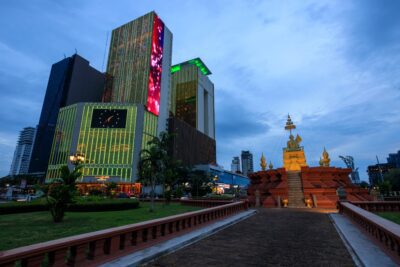
Four major Cambodian casino resorts–linked to Indonesian owners–form the core of the online gambling network targeting Indonesians, avoiding detection by operating offshore.
Indonesia’s Tempo magazine names these casino-resorts as the Kompong Dewa Casino, Trimulia Casino, The Holiday Palace and Istana Casino.
According to employee testimony secured by iGF, each resort hosts hundreds, sometimes thousands, of gambling URLs within its gated, entry-restricted compound.
The sector is believed to employ around 80,000 of the 130,000 Indonesians living in Cambodia – a number that has surged since 2020, according to the Indonesian Embassy in the Cambodian capital, Phnom Penh.
Our informants explained there are two main ways an online operation runs under a resort’s umbrella and licence protection: Either rent office space and operate directly from within the resort, or use the resort’s proprietary online casino platform infrastructure.
Rather than a one-off payment or subscription, resort owners cash-in via profit-sharing deals, typically receiving no less than 25 percent of profits, and often more depending on the arrangement.
Word-Of-Mouth Recruitment
Indonesian staff play a key role in maintaining the sector and bringing new players to these platforms. While social media–Facebook, Instagram, community networks–helps attract customers, the real recruitment happens behind the scenes.
Sources shared that Customer Support (CS) agents can register new accounts with as little as a phone number. Players are encouraged to recruit friends, spreading the platform through word-of-mouth marketing.
The more players a CS agent brings in, the larger their bonus – an incentive structure that keeps recruitment aggressive. And because accounts require only a phone number, they are almost untraceable.
Indonesian staff are enticed to Cambodia with higher wages.
According to sources, they earned approximately Indonesia Rupiah 13.5 million (£616/US$808) per month, with potential bonuses reaching Rp 30.1 million (£1,375/US$1,803) annually.
By comparison, Indonesia’s minimum wage averages around Rp 5 million (£228/ US$299) per month.
Money Flows
Amid growing restrictions on gambling transactions via Indonesian banks, sources described sophisticated multi-layered workarounds.
These included mobile payments, e-wallets, cryptocurrency, and credit systems that allow money to move freely, bypassing national controls. Because accounts can be opened with only a phone number, tracing transactions becomes nearly impossible, ensuring profits reach operators – many of whom maintain financial bases inside Indonesia to avoid international scrutiny.
Sources also described in-person cash collection schemes that pooled player deposits and disguised them. They estimated “no more than five percent of player deposits actually left Indonesia”.
Corrupt
There have also been accusations of Indonesian government offices helping gambling operators in exchange for under-the-table payments.
In 2024, Budi Arie Setiadi, the former Minister of Communication & Informatics–the department responsible for blocking gambling URLs–was accused of protecting over 20,000 platforms in exchange for Rp 171.11 billion (£7.8 m/US$10.2 m). He was alleged to have received half of the total. Ten other Ministry staff were arrested in connection with the same scheme.
Setiadi has firmly denied allegations, but he was recently removed from government in a reshuffle amid these accusations. The case is still being “investigated”.
Performative Enforcement
Despite the current President’s ongoing anti-gambling crackdown and nationalist rhetoric, the reality on the ground tells a different story.
With politicians allegedly linked to protecting online gambling URLs rather than blocking them and, in the case of Sufmi Dasco Ahmad, allegations of past involvement in Indonesian-owned, Cambodia-based casino operations such as Trimulia Casino–the credibility of Indonesia’s gambling crackdown is deeply questioned.
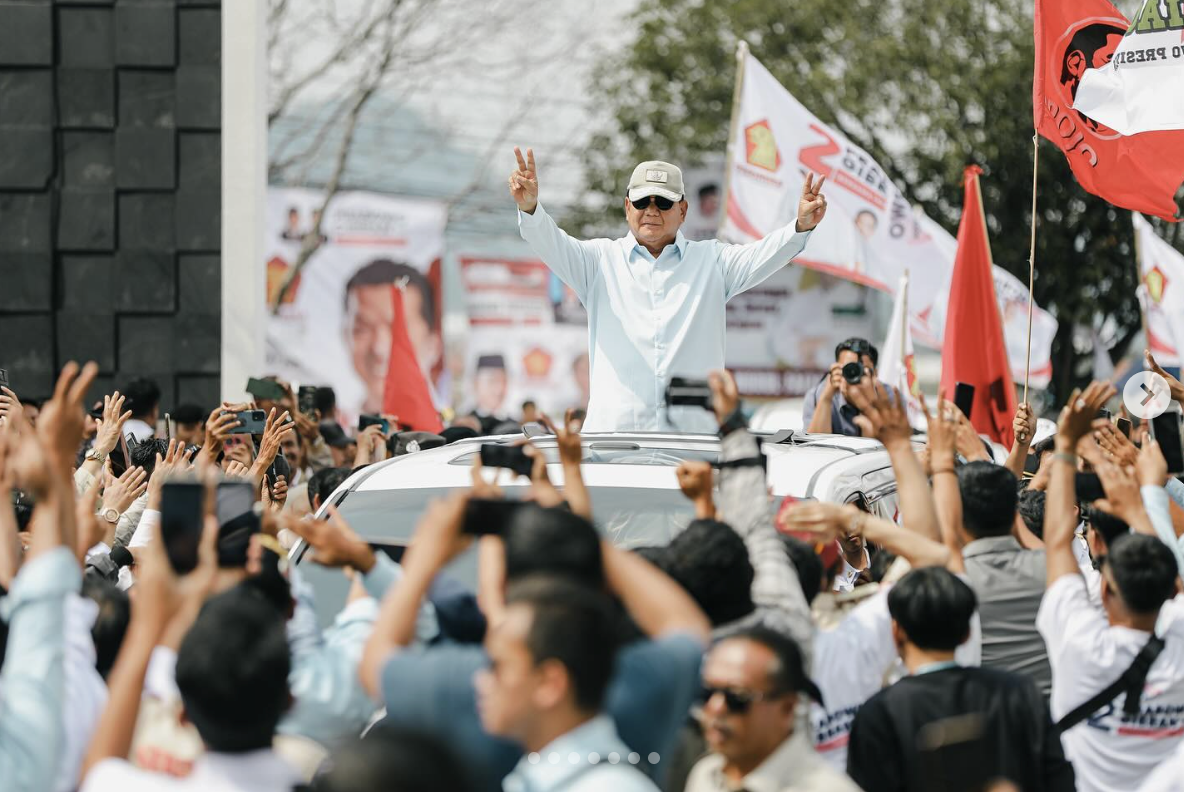
President Subianto, 74, better known simply by his first name Prabowo, is no stranger to power politics and political theatre.
He was a key military general during the dark years of Indonesia’s Suharto dictatorship, which gripped the nation from 1967 to 1998. And until recently, he was infamous for his leadership of several massacres and was widely regarded as a war criminal, although never charged.
Little Incentive To Intervene
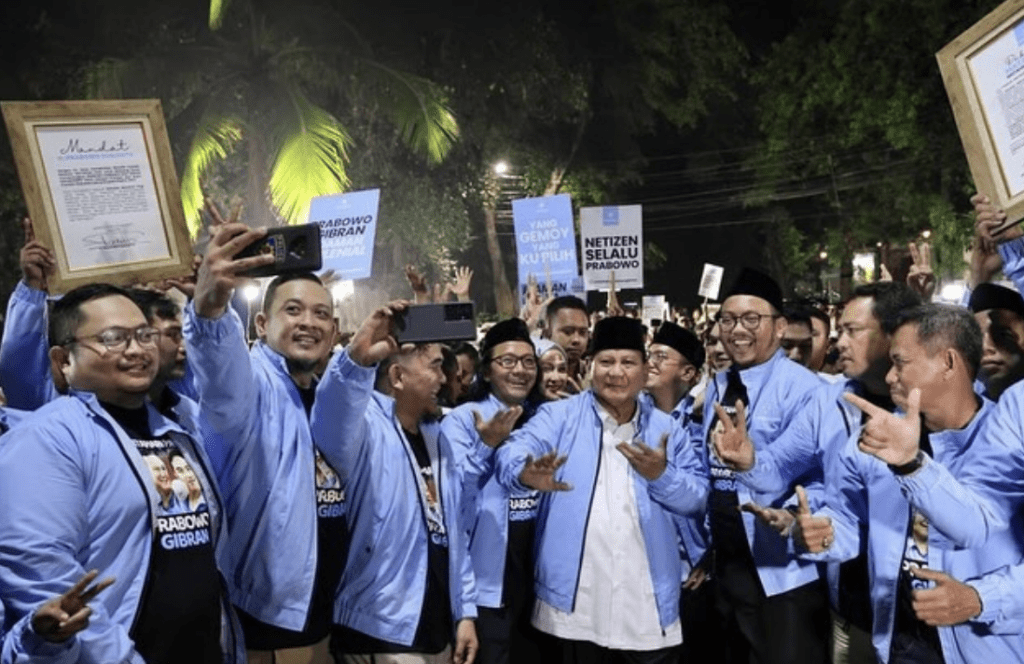
Prabowo gained widespread political and public rehabilitation in 2024 with a deft election campaign, which saw him literally dance his way to the Presidential office, securing 58.6 percent of the vote after undergoing one of the most miraculous rebrands of this century, becoming, of all things, a friendly grandpa.
However, since he took office, nationwide protests have broken out over government wage increases, which protesters claim were designed to advantage the country’s leaders at the expense of ordinary citizens.
Given President Prabowo’s past performance, and the incentives at play, meaningful reform in Indonesia appears highly unlikely in the immediate to near future.
And with former ministers, sitting politicians, and ministry staff all implicated in gambling-related corruption, it’s clear this isn’t about isolated cases but a broader network with rules written by those at the top.
Meanwhile, Cambodia’s resorts continue generating tax revenue, jobs, and foreign investment, leaving Phnom Penh with little incentive to intervene in the great Indonesia offshore gambling scam.