
For Betfred founder Fred Done it all began with a £25 punt on England winning the 1966 World Cup. But 60-years later it looks unlikely that any of the customers in his 1,287 High Street bookies will be able to place wagers on next year’s tournament in the U.S.
With looming tax hikes, and already higher national insurance payments, the UK’s retail gambling industry is facing an existential crisis, warns Done, and it could lead to the closure of thousands of betting shops, and the loss of tens of thousands of jobs, the billionaire Betfred founder and “local lad” legend told the media at the weekend.
Born in Salford, Greater Manchester, Done used his £200 World Cup winnings to open his first betting shop with his brother, Peter, the following year in 1967.
Today the Done brothers, both in their 80s, are Britain’s second biggest tax payers–£273.4 million (US$367.10m) last year–and employ over 7,000 at their retail and iGaming business, which is still headquartered in the North West, in Warrington.
But if the Chancellor Rachel Reeves pushes ahead with her much-telegraphed tax rises it will spell disaster for Betfred and other High Street betting companies.
Illegal Bookie
This is the biggest threat facing betting shops since they were legalised in 1961, warned Done, whose father was a local street, or illegal, bookie.

And he is echoing fears expressed this month by Flutter Entertainment’s Paddy Power, who are closing 57 of their shops in the U.K. and Ireland; while both Entain, owner of Ladbrokes Coral, and William Hill’s Evoke have also threatened to shutter hundreds of their bookies if the tax hikes are imposed.
Pushed by former Labour British prime minister Gordon Brown, a coalition of 100 backbench socialist MPs and the left-wing Institute for Public Policy Research (IPPR) think-tank, Reeves is being urged to increase iGaming taxes from 21 percent to 50 percent, the current 20 percent duty on slots and gaming machines also to 50 percent and general betting duty on sports fixtures from 15 percent to 30 percent.
Government economists estimate the higher taxes would generate an extra £3.2 billion a year (US$4.29bn), on top of the £3.7 billion (US$4.96bn) the gambling industry already pays the exchequer per year – and help alleviate child poverty, as well as help fill the nation’s £30 billion (US$40.28bn) budget shortfall.
But the gambling industry, citing the recent case of Holland, where the tax yield fell after tax increases, say such a move would only force even more players to gamble on illegal off-shore sites.
Bad for Business
“With the internet now, you can’t stop it. The last thing I want to see is people with gambling problems. They are bad for business,” asserted Done.
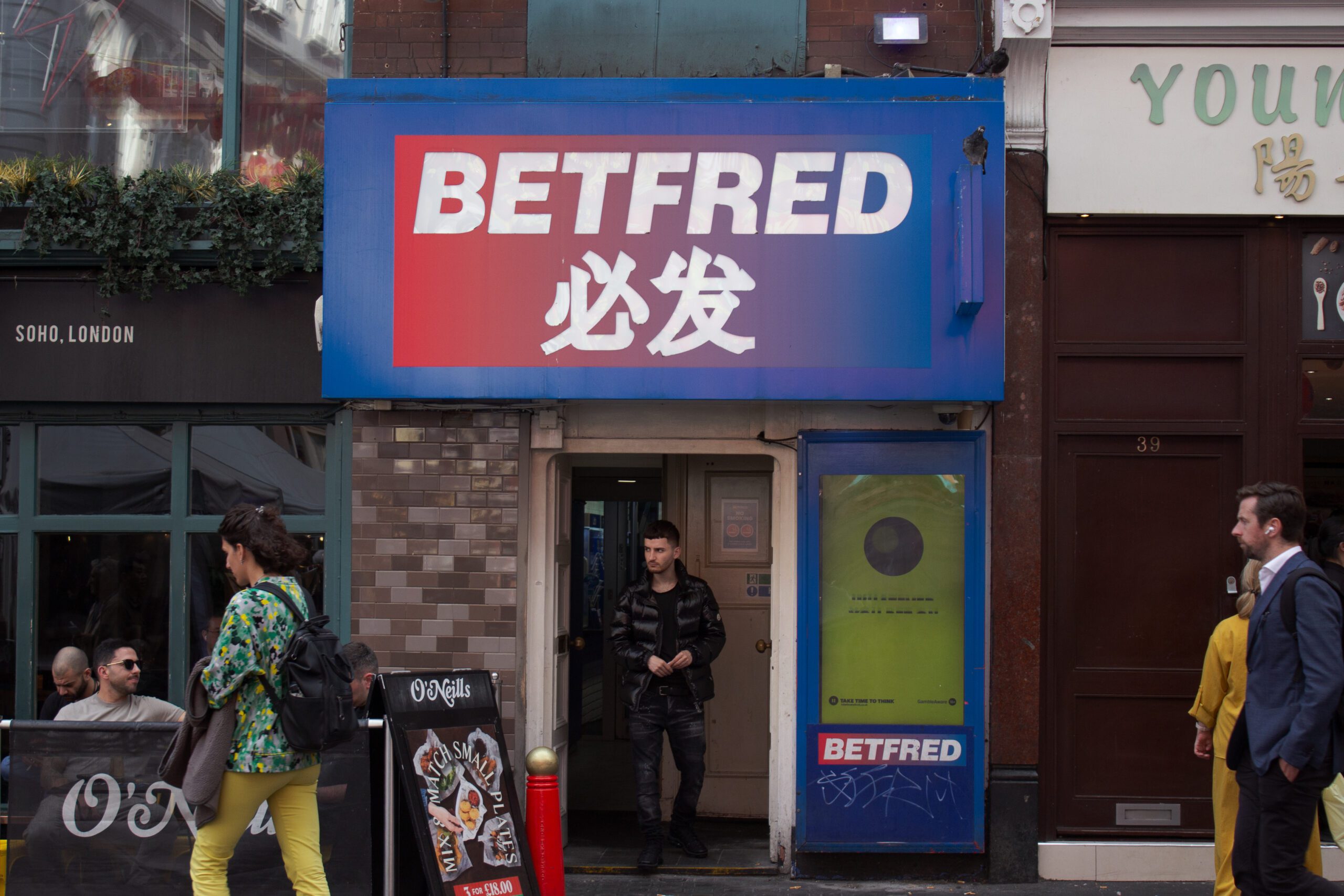
“If tax went up to anywhere like 40 percent or even 35 percent there is no profit in the business. We would have to close it down. I’m talking about job losses here. We’re talking probably 7,500,” the Betfred owner told the BBC.
“300 [of my shops are] currently losing money. A five percent increase on gambling taxes would raise that number to 430.
“Recent increases in employer National Insurance Contributions and the minimum wage have already added £20m (US$26.84m) to my company’s costs,” said Done.
According to some estimates, the effects of harmful gambling costs the UK up to £1.77 billion a year (US$2.37bn) in societal impact.
Addiction
And Prof. Ashwin Kumar, Director of Research and Policy at the IPPR think-tank believes that higher taxes are needed to combat gambling addiction.

“We know that most of the profits made by gambling companies come from a very small number of gamblers, many of whom are at risk of serious harm. And so we think that the duties should be higher, just like tobacco and alcohol,” he argues.
Yet the UK’s near-6,000 High Street bookies, employing around 46,000 people, also perform a vital social function of cohesion, social affability and fun, says Fred Done.
“I’m really proud of our business. We’re a big part of the community in some areas. The average bet is £9 (US$12). You should see the friendship and atmosphere between our workers and our customers.
“We’re not the scourge of society.
“We’re part of the entertainment industry!”
- Missouri Sports Betting Off To A Show-Show Start
- Danske Spil adds S Gaming slot to Danish iGaming Offer
- Letter From America 52
- Cryptocasinos Station-to-Station, All Aboard The Blockchain Train
- Getting In On The Football Action: WSF Odds
- Bridging the Gap Between Technology & Compliance: Interview – Bradley Khoury, eCOGRA