

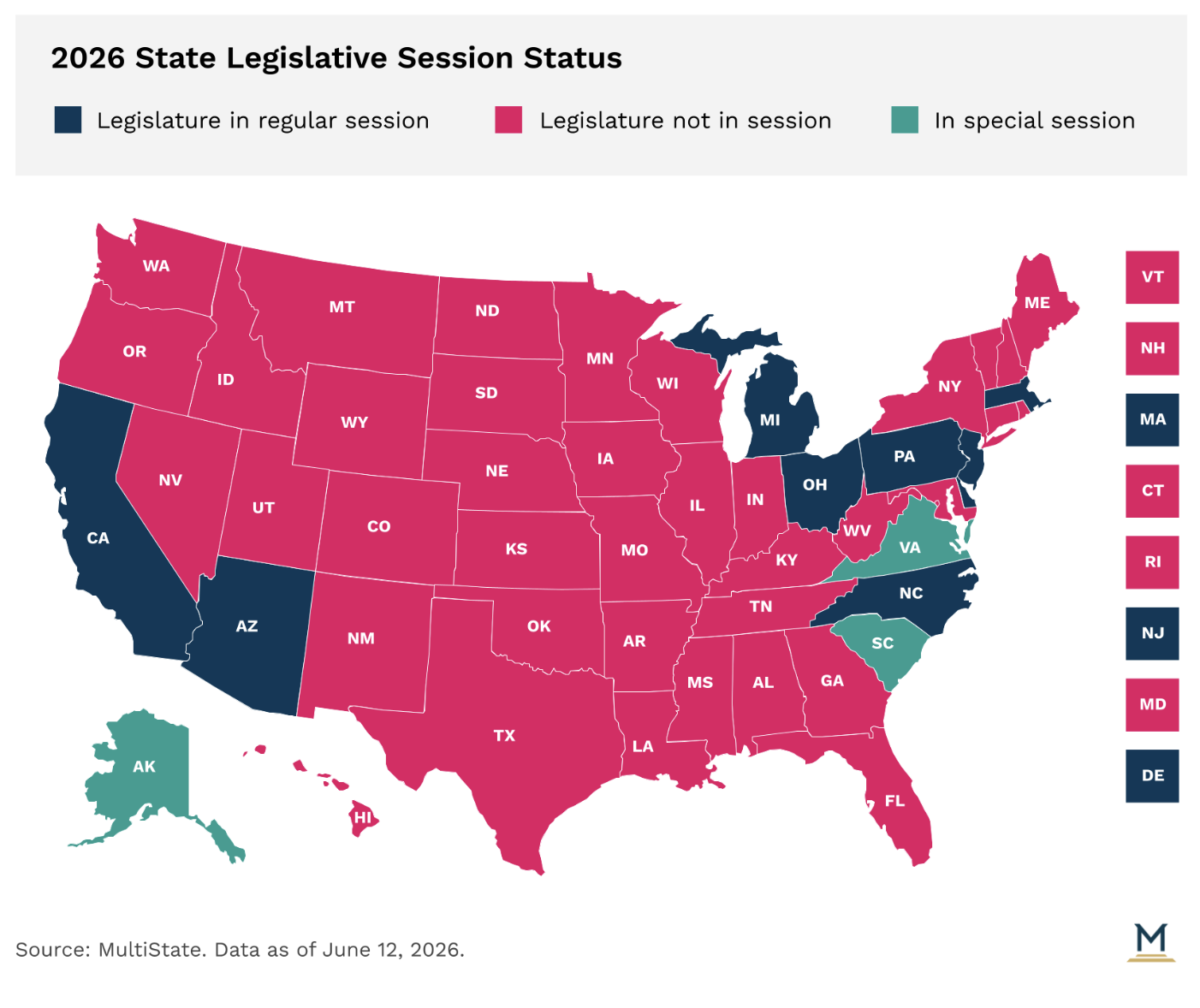
With most state governments shutting their legislative doors to end their 2026 law making season, it’s an apposite time to take legal stock of iGaming across The United States.
And with sports betting already legal in 39 of the 50 U.S. states–plus the capital, Washington D.C. and Caribbean dependency of Puerto Rico–, the focus of gambling legislation is shifting across this vast nation – the biggest and richest betting market in the world.
Rather than debating gambling legalisation, most lawmakers in more mature U.S. markets spent 2026 rewriting the rulebook: Tightening consumer protections, raising taxes and renewing enforcement powers for regulators targeting illegal operators.
 Tighter RG Controls
As growth matures and consolidates in many U.S. markets, policymakers tend to look towards tighter consumer protections, which is exactly what we saw play out across legislative floors statewide this year.
Colorado, Kentucky and Pennsylvania lead the way with the most comprehensive responsible gambling (RG) approaches.
Colorado passed SB 26-131, banning credit card use, limiting deposits to five per day, restricting marketing channels, banning misleading promotional language and limiting daytime TV advertising.
Kentucky’s HB 904 was passed over a governor veto, reflecting growing bipartisan concern over gambling harm.
Player Protections
The bill introduces crucial player protections, including raising the betting age from 18- to 21-years-old, expanding the state’s self-exclusion program, making RG messaging mandatory, preventing prop bets on college teams and other consumer protections.
In Pennsylvania,–the legislative session stays open until November 30–legislators are still busy working through the details of the Online Consumer Protection Act, which mirrors many of the controls detailed above, adding increased funding provisions for RG education and treatment.
New Jersey–session open until December 30–is seeking to restrict micro bets and to limit advertising, reflecting the ongoing scrutiny of prop and performance betting alongside growing sports integrity alerts.
Virginia created a consolidated Virginia Gambling Commission, unifying the state’s approach to consumer protection, compliance and RG guardrails.
Puerto Rico and New Hampshire expanded and reinforced their state self-exclusion schemes.
Raising Taxes
The need to balance competitive market conditions with taxation is an issue many maturing jurisdictions struggle to get right.
In the U.S., where many states debuted with rock bottom rates averaging around 18 percent, tax increases were a subject of debate in multiple legislative chambers, reflecting a shift in perception from market growth to revenue optimisation.
North Carolina’s yearly budget increased betting taxes from 18 percent up to 23 percent, Louisiana raised from 15 percent to 21.5 percent after debating 50 percent, and Maryland passed a new budget that included tax rises from 15 percent up to 20 percent.
Meanwhile, bills in New Jersey (13 percent up to 25 percent), West Virginia (from 10 to 25 percent) and Ohio (from 20 to 40 percent) – all failed to pass.
Michigan and Indiana also debated increases.
Fighting Illegal Operators
With the already present threat of prediction markets adding to the jeopardy posed by offshore sites, a slew of states moved to strengthen enforcement against unregulated operators.
Louisiana signed into law House Bill 53 and House Bill 883, which impose strict penalties on platform providers and payment processors for unregulated gaming sites.
Iowa enacted Senate File 2289, granting the Racing and Gaming Commission broader authority to issue cease-and-desist orders against unlicensed, offshore and sweepstakes operators.
In May, lawmakers in Tennessee, Louisiana and Oklahoma advanced legislation effectively banning sweepstakes-style gaming; although Oklahoma’s bill was ultimately vetoed before being overridden by the legislature.
Indiana and Maine got in early, passing anti-sweepstakes legislation earlier in their sessions.
Mississippi, Florida, Virginia and Massachusetts were the only states where sweepstakes bills were proposed and failed.
Prediction Markets
Prediction markets quickly became one of the most active issues of the 2026 legislative session, with around 15 states considering some form of regulation, taxation or restriction.

What kicked-off the year as a niche product expanded into a national debate over who controls sports betting – states and Tribes or the CFTC.
And this legal conflict became the most contentious of the 2026 lawmaking season.
Cashing-in
Rather than await judicial or Congressional clarity, two states moved to cash-in on the prediction market zeitgeist.
Kentucky passed H757, establishing a 14.25 percent tax on prediction market operator transaction fees, alongside HB 904 – which also prohibits racetracks and associations from partnering with prediction market platforms or related service providers.
Illinois, meanwhile, folded prediction market contracts into its FY2027 budget, imposing a 1.75 percent tax on exchange wagers, rising to 3.5 percent after five million contracts annually.
Minnesota Ban
Minnesota was the only state to enact a clear statutory ban on prediction markets in 2026, through SF 3432.
Other states considering restricting prediction markets–bills introduced but not yet enacted and sessions still open–include California, Massachusetts, New Jersey, North Carolina and Ohio.
In Connecticut, Vermont, Virginia and Georgia prediction market ban bills did not advance into law.
In Hawaii, Iowa, Tennessee and New York, prediction market ban proposals all died when their respective sessions shut for the season.
Only Wisconsin
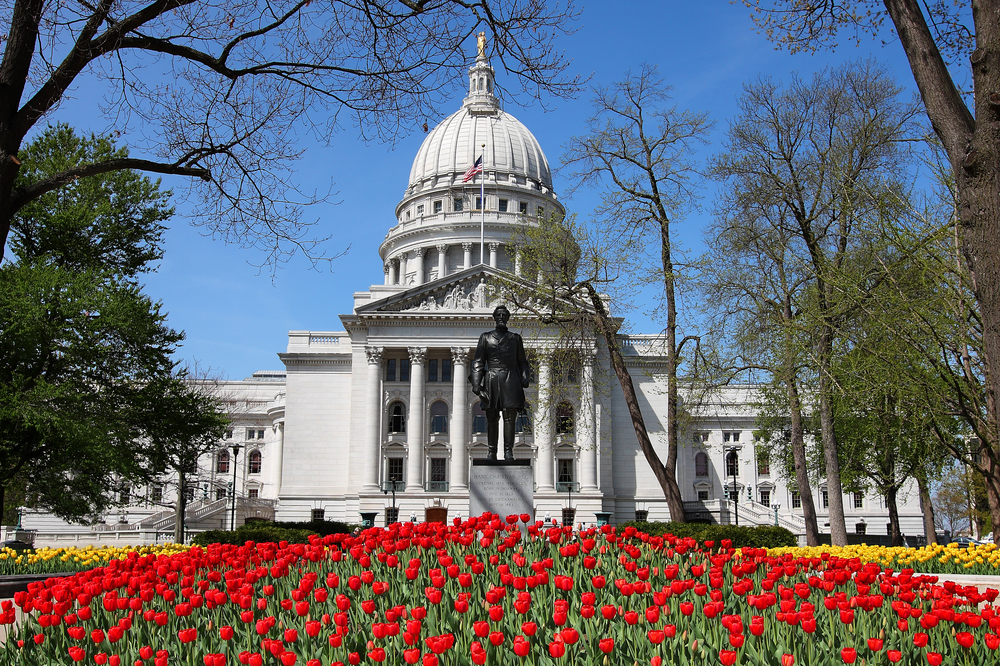
No legislative wrap-up of 2026 would be complete without mentioning Wisconsin, the only state to make meaningful progress on sports betting expansion this year.
While most legislatures focused on regulating existing markets, Wisconsin lawmakers approved Assembly Bill 601, creating a statewide online sports betting framework through the state’s Tribal operators using a hub-and-spoke model similar to Florida’s.