
Sports betting expansion has failed in Oklahoma for another year running and it wasn’t just a case of legislative gridlock.
The failure of HB 1047 has exposed deeper fault lines, including a tribal split, a Governor’s grudge and a complex legal framework that proved too difficult to reconcile.
Last-minute amendments fractured support in Indian Country for the proposed new gambling legislation and Oklahoma’s largest Indian Tribe, the Cherokee Nation, took particular issue with proposed geographical restrictions placed on mobile betting.
House Bill 1047, the brainchild of Representative Ken Luttrell (R) and Senator Bill Coleman (R), ultimately failed in the state Senate on April 22, with 27 votes against and 21 in favour.
Eight-years and countless hours of negotiations in the making, the bill would have legalised retail and statewide mobile sports betting for Oklahoma’s 38 federally-recognised tribes, via a supplement to their existing gaming compacts.
But despite optimism and backing from a majority of tribes under the Oklahoma Indian Gaming Association (OIGA), as well as support from public universities and sports leagues, a final resolution could not be reached.
Opposition
Opposition came from multiple fronts.
Some state lawmakers argued sports betting would bring more social ills than gains.
Indian Country disagreed over the breakdown of where and how sports betting would be limited.
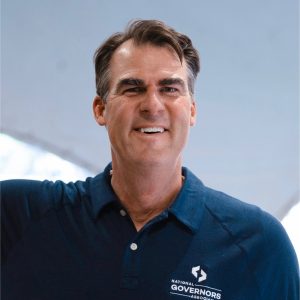
And, due to a long-running grudge, the state’s Governor Kevin Stitt (R) said he wouldn’t sign a bill giving the state’s Tribes a monopoly over sports betting.
The bill proposed a layered system, allowing betting on both tribal “historic reservation” lands and statewide (under certain conditions), using a server-based legal framework, where bets would be considered to take place wherever the server is located.
For the majority of tribes under the OIGA, this was a workable compromise. For others, it was dangerous territory.
Clashing Priorities
While the Cherokee Nation has not publicly spoken out on the matter since the bill was rejected, the disagreement appears centred on geography and control.
Unlike the majority of Oklahoma’s tribes, the Cherokees wanted widespread, unrestricted mobile betting.
But the final proposal backed by the OIGA leaned toward a more limited structure, where tribes would primarily operate mobile betting within their own territories.
And in cases where betting occurred outside those lands, bets would be deemed to take place where the server was located.
For the Cherokee Nation, this created two problems.
First, it risked producing a fragmented system where different betting apps might only function in certain areas, something lawmakers themselves acknowledged could confuse users. As Luttrell noted, Oklahomans are unlikely to want “different rules for different apps in different locations”.
Second, and more significantly, the bill introduced the concept of “historic reservation lands”, drawing on complex federal legal definitions tied to tribal sovereignty.
Blurred Lines
Principal Chief Chuck Hoskin Jr. of the Cherokee Nation warned that this was an area the state should not be entering. By tying mobile betting to these definitions, the legislation blurred the line between state authority and federal Indian law, raising concerns not just about betting but also about jurisdiction.
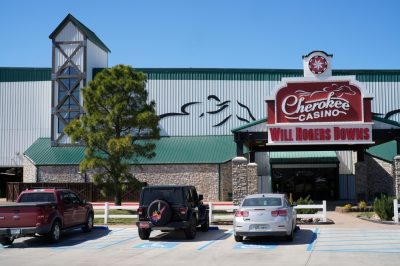
While the Senate’s debate touched on the issues of tribal geography and geofencing, it mostly focused on the social, moral and health concerns tied to gambling legalisation.
Legislative Advisor Jennifer Monies told local news station, KOSU, that this was unexpected.
Many believed the bill would pass the Senate, but stall with Governor Kevin Stitt, who has been in a long-running dispute with Indian Country over multiple issues, including tribal sovereignty, gaming compacts, criminal jurisdiction, and taxation rights.
Feud
And that feud is key.
It links back to the landmark 2020 U.S. Supreme Court ruling McGirt v. Oklahoma. The court ruled that the eastern portion of Oklahoma–roughly half the state–was never disestablished by Congress and remains a legally-recognised reservation.
This, alongside many previous clashes with Governor Stitt, helps explain why the Cherokee Nation does not want the state further involved in defining reservation lands or regulating activity on them.
Off The Table
In the run-up to HB 1047’s Senate reading, Governor Stitt made his opposition clear, saying he would not support any expansion to the state’s tribal gaming compact.
Coleman and Luttrell both expressed their disappointment with the results, emphasising that thanks to the proliferation of prediction markets, betting was already taking place in the state without generating revenue for tribes or the government or providing consumer protections.
Meanwhile OIGA Chair Matthew Morgan told iGF: “Members of the Oklahoma Indian Gaming Association will continue to engage with lawmakers and stakeholders in conversations about positioning the industry in a way that benefits Oklahomans.”
Nevertheless, although pressure to reach a deal is unlikely to ease, for now sports betting in the Sooner State appears to be off the table.