Nigeria’s Great Regulatory Challenge: One Market, Many Rulebooks

SPECIAL REPORT: Nigeria is Africa’s largest betting market by population, with industry estimates suggesting nearly 60 million Nigerians participate in sports betting. It is also becoming one of the continent’s most complex regulatory environments, making the relationship between market growth and regulation increasingly difficult to ignore, writes Tooni Wale.
That complexity exists against the backdrop of a market that is still only partially regulated.
Gaming Compliance International estimates Africa’s online gambling market generated US$23 billion (£17.2bn) in revenue during 2025, although only US$5.2 billion (£3.9bn) flowed through licensed operators.
Nigeria, the most populous nation in Africa, with 242.2 million people, recorded the lowest level of unregulated online activity in West Africa at 56 percent, compared with a regional average of 69 percent, highlighting both the scale of the opportunity and the challenge regulators continue to face.
Commercial Opportunity
The commercial opportunity, however, remains difficult to ignore.
According to market intelligence firm Blask, SportyBet, Bet9ja and BetKing account for more than 86 percent of branded betting demand in Nigeria, underlining the dominance of established domestic brands even as the regulatory landscape evolves.
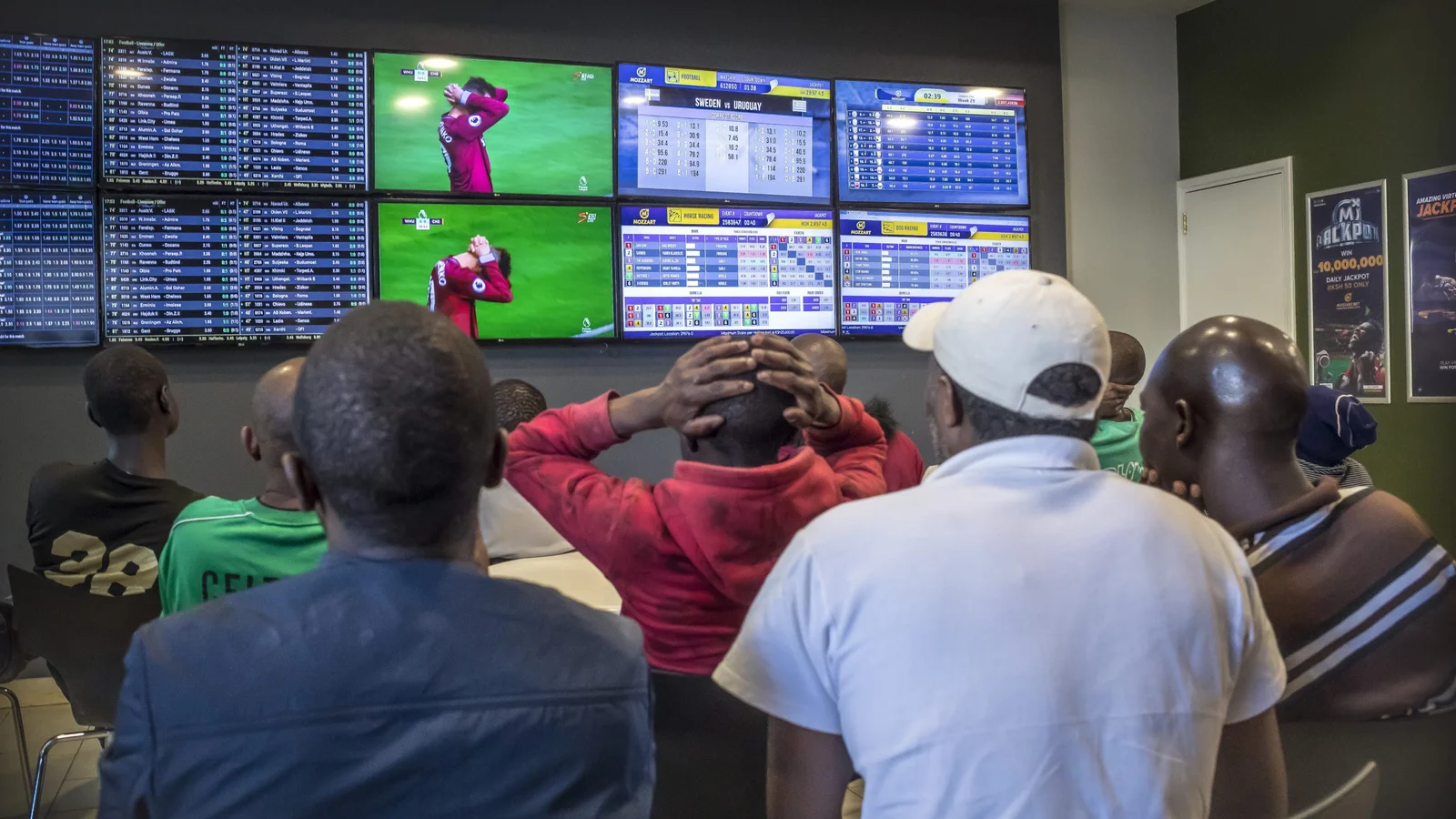
And international operators remain far less dominant than established local brands, suggesting that navigating Nigeria’s regulatory framework has become just as important as acquiring customers.
That framework changed fundamentally after the Supreme Court’s November 2024 ruling stripped the National Lottery Regulatory Commission (NLRC) of its nationwide authority and confirmed that gambling regulation rests with the states. Operators effectively moved from navigating one regulatory regime to navigating 37 jurisdictions.
“Since 2024, while it brought clarity to the industry, it also created a lot of fragmentation issues that we needed to address,” Fisayo Oke, CEO of Gamble Alert and former Head of Operations at the Oyo State Gaming Board, tells iGamingFuture.
Before the ruling, operators largely assumed that a single NLRC licence covered the entire country. That assumption no longer holds. “Out of 36 states – plus the FCT, there are only about six to eight states that have something quite solid in terms of regulation,” Oke says.
Investment
Oke believes regulatory uncertainty has not deterred investment in the way many expected. He says gambling operators assess Nigeria differently from investors in most other industries. In his view, the country’s young population and long-term commercial opportunity continue to outweigh regulatory uncertainty.
He puts Africa’s black market at close to 70 percent of activity, suggesting operators are willing to enter markets with or without a fully developed licensing framework. What fragmentation has slowed, he argues, isn’t appetite, it’s issuance, as entrants who can’t afford the new licence fees stay unlicensed rather than stay out.
Others frame it differently.

“The most challenging aspect was operational uncertainty in the period between November 2024 and May 2025,” affirms Adewumi Salami, legal director at DLA Piper Africa in Lagos, describing a contentious period when many operators ran on old NLRC paperwork while states worked out how to enforce their new regulatory authority – if at all.
Faced with this legal labyrinth, the Nigerian gambling industry has thrown its weight behind the newly-minted Federation of State Gaming Regulators of Nigeria (FSGRN), now counting more than 20 member states, which launched a Subnational Reciprocity Licensing Framework in May 2025.
Crucially the FSCRN’s Universal Reciprocity Certificate lets an operator apply once and operate across every member state.
Workaround
But it’s a workaround, not a law, and the tension is real.
Lagos, home to most industry headquarters, has used its weight to argue for a larger cut of the pooled fee. Northern states that historically collected next to nothing, in some cases as little as ₦500,000(£242/US$327) a year, are now guaranteed a share simply for signing on.
States such as Oyo, which sit between those two extremes, are potentially the most exposed.
“If they were to issue five licenses on their own, how much would they have gotten compared to how much they get from this sharing formula?” Oke asks.
There’s a legal question too: The Supreme Court empowered states, not a federation of them, and many operators are asking just who authorised the FSGRN to issue anything at all.
Nevertheless, most operators comply anyway, as the best way of doing business in the absence of other options.
Odunayo Ibitoye, an Associate at Templars Law in Lagos, sees the reciprocity model as a genuine improvement, with the potential to “remove duplicative licensing burdens and enhance regulatory coordination” – although it only currently covers online licences and still leaves iGaming operations in non-member states facing the old duplicative grind.
Operators are pushing back on terms, too.
When the FSGRN briefed the industry on a flat 11 percent GGR tax and a proposed withholding tax on player winnings, Bet9ja objected through Adewale Akande, its Head of Legal and Compliance, arguing it would hurt the states it’s meant to fund, and that requiring punters’ tax ID numbers breaches privacy terms with customers.
Fragmentation Cuts Both Ways
FSGRN President Bashir Are acknowledged those concerns, saying the point was fair.
“If you win a jackpot, that may be understandable,” he argues, adding that perhaps tax should only kick in on winnings in excess of ₦5 million(£2,420/US$3,270) or a possible threshold of ₦10 million (£4,840/US$6,540), rather than taxing every payout.
On player protection, fragmentation cuts both ways.
Lagos jurisdiction, for example, runs SafePlay, flagging a self-excluded player across every licensed operator in the state instantly.
Cross into Oyo or Ondo, or any other state, and none of that follows.
“The day I travel to Ibadan, I can do all I want,” says Oke.
For him, the gap illustrates that the federation is doing more to harmonise licensing and revenue than player protection standards.
Africa Learnings
He compares it to so-called “profit shifting”, whereby operators can route activity toward whichever state is more relaxed on compliance.And enforcement capacity compounds the problem.
Oke describes state gaming boards running with a handful of staff covering dozens of local government areas, on travel budgets too thin for serious monitoring.
“If you have 10 people in the office, how do you truly monitor if someone is playing at the border of Ibadan and Oyo State?” he queries. “Sometimes regulators simply lack the power to do more than collect fees and write letters.”
And Nigeria isn’t alone in Africa in wrestling with fragmented oversight.
John Mutua, CEO of the Association of Gaming Operators Kenya, points to Kenya’s own split across five separate bodies, the GRA, KFCB, FRC, KRA and the Communications Authority, describing a setup with “no single owner accountable for the whole”.
His conclusion for regulators elsewhere: Build the institution before the market outgrows it, not after.
Musa Mngadi, of the African Lotteries and Gaming Association, cautions against measuring regulatory success purely by GGR.
Clarity, Certainty, Consistency
Robin Bennett, head of compliance at the Western Cape Gambling and Racing Board, puts it more simply: Regulation works best when it’s built on clarity, certainty and consistency, matched by practical enforcement.
Nigeria’s betting industry has continued growing despite its regulatory upheaval.
Local operators have adapted quickly. Investors remain interested. Yet the country’s next phase may depend less on market demand than on whether dozens of regulators can convince operators they are still doing business in one market rather than many.
The Supreme Court may have settled the constitutional question.
But whether Nigeria’s fragmented regulatory system can deliver the certainty investors and operators ultimately need remains the industry’s biggest unanswered question.