American lawmakers have grilled representatives from both the gambling and prediction market sectors during an action-packed Senate hearing, examining sports integrity and the rapid expansion of betting in America.
The U.S. Senate Commerce sub-Committee on Consumer Protection, Technology, and Data Privacy convened the hearing on Wednesday–“No Sure Bets: Protecting Sports Integrity in America”–to discuss the impact legal sports wagering is having on professional and collegiate sports.
But what began as a hearing on sports integrity quickly descended into something far more interesting: A full-blown bipartisan pile-on against prediction markets, which emerged as the day’s clear villain.
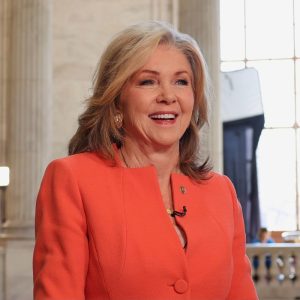
As the all-star cast of witnesses and Senators gathered on Capitol Hill for the 10 a.m. hearing, sub-Committee Chair Senator Marsha Blackburn (R-TN) set the tone for what was ultimately a political temperature check of the betting industry.
Match-fixing
“When Americans watch their favorite sports team, they don’t want to worry about the game being rigged,” Blackburn asserted: “They don’t want to worry that their favorite player missed a free throw to make an extra buck on the side.”
Referencing recent match-fixing scandals involving the NBA and MLB, Blackburn argued that the “rapid explosion” of legal sports betting had heightened concerns around the integrity of American sport.
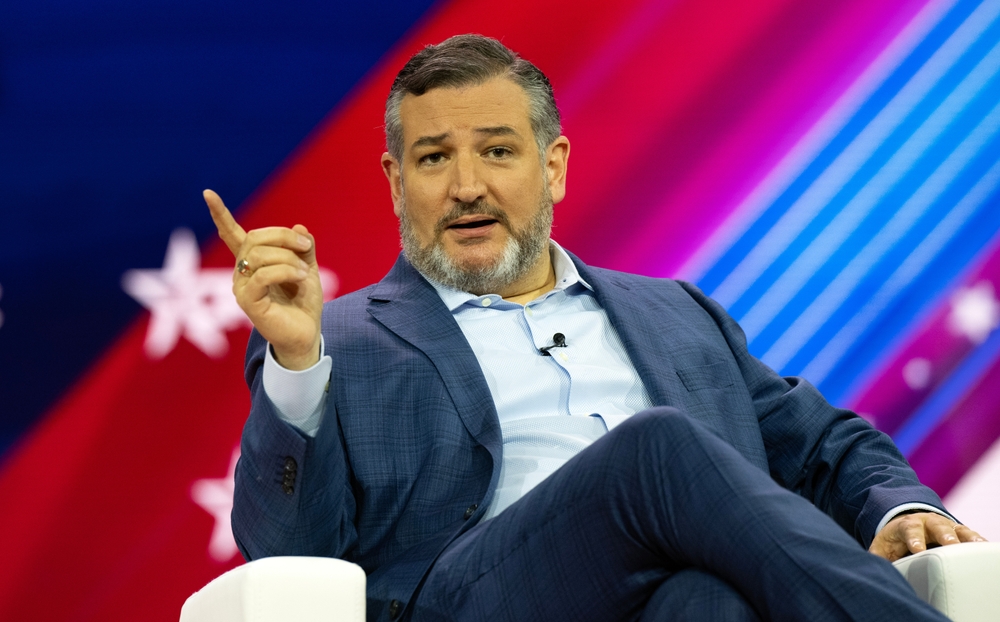
Presidential hopeful and Chair of the over-riding Commerce Committee, Senator Ted Cruz (R-TX) highlighted the two key questions before the panel: “First, in a world where sports betting exists, how do we preserve the integrity and authenticity of the sports that we love?
“And second: Are prediction markets operating within the law, or are they defying the law and improperly infringing on state sovereignty?”
Scrutiny
The second question would go on to dominate much of the following hearing.
Representing the traditional sports betting industry were Bill Miller of the American Gaming Association (AGA), Mary Beth Thomas of the Tennessee Sports Wagering Council and Scott Sadin of Integrity Compliance 360.
Facing the scrutiny of senators, all three presented a coherent defence of how the online betting industry helps monitor, flag, and investigate cases of sports manipulation.
They argued that increased reports of suspicious betting do not necessarily indicate more manipulation, but rather stronger monitoring technology capable of detecting and flagging irregularities in real time.
Mary Thomas explained that regulators have backdoor access to all operator platforms so they can view data live and investigate cases that are flagged as suspicious.
Interrogators
But the senatorial attack line was considerably more uncomfortable for Patrick McHenry, serving as the Senior Advisor for The Coalition for Prediction Markets (CPA).
McHenry repeatedly failed to convince his interrogators of the difference between prediction market sports swaps and betting.
Attracting the overwhelming majority of Senators’ questions, he appeared increasingly pressured and adrift.
Asked whether prediction markets would submit to the same level of oversight as state-licensed sportsbooks, he responded, cryptically, that prediction markets answer to “a higher authority”.
Many of the responses given by McHenry repeated the same rationale being mooted by prediction market boosters since the start of this year, namely that prediction markets aren’t gambling because they use a different business model (player vs player rather than player vs house), and that they’re “safe” (because of federal and self-regulation).
Supreme Court
Nevertheless, the ongoing controversy over the legality of prediction markets in the formal betting space dominated proceedings.
For months, prediction markets have rolled out aggressively across the U.S., often wilfully ignoring the wishes of state lawmakers and regulators, and senators laser-focussed on grilling the CPA rep.
Questions were comprehensive and ranged from state tax avoidance and age-gating to concerns over irresponsible gambling, predatory advertising practices, self-regulation, states’ rights, and Indian gaming rights.
Amid the explosive growth of prediction markets and multiple nationwide court cases pitting state regulators against the federally-regulated trading platforms, many gambling watchers believe that this contentious issue can only be resolved by the U.S. Supreme Court.