
“And I wish I could find the right words, to make you feel better and walk out of this place,” sang Tim Freedman, frontman of The Whitlams, in their 1999 hit Blow Up the Pokies.
“Pokies”–poker machines–are an ubiquitous part of Australian social life. They are found in pubs, clubs and casinos across every state and every territory.
According to the Australia Institute, Australia has 18 percent of the world’s poker machines. Yet the country is home to less than one percent of the world’s population.
Pokies aren’t just a marginal habit in the Land Down Under, they’re the main course feeding the nation’s hefty gambling appetite. And this gluttony is starting to lead to unhealthy symptoms.
In May of last year, Pokies industry giant, Mounties, was accused by AUSTRAC, Australia’s anti-money laundering regulator and enforcer, of letting gamblers wager AUS$140 million (£74m) of dirty money.
And the Ozzie AML watchdogs have since launched civil penalty proceedings against the Sydney-based tycoons, after sharing in court documents that they had “served innumerable customers without adequate controls”.
In this Part Two of iGamingFuture’s investigation into the Aussie gambling landscape, we’ll be exploring the industry’s deep-set corruption issues.
Junkets, Corruption and Organised Crime
Australia has long struggled with corruption in its land-based casinos and associated economies.
Six-years-ago, a major investigative report by AUSTRAC, found that more than 1,000 junket programs operated across the country – with almost two-in-three casinos working with junket operators.
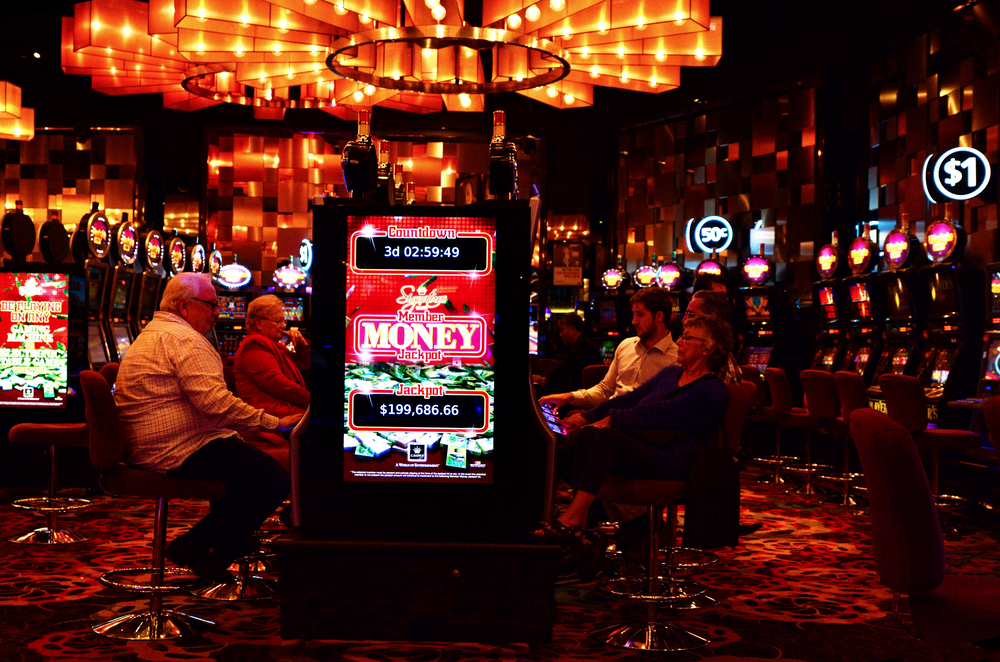
The report warned that many of these operations have been infiltrated by criminal groups, including Asian organised crime networks and transnational money laundering syndicates.
Junket tour operators organise package trips that take clients to casinos and other entertainment venues. In exchange for bringing in high-rolling customers, they earn commissions based on gambling activity.
In many cases, operators also manage and hold customers’ gambling funds directly, allowing players to focus entirely on play.
Money Laundering
And this creates significant money laundering vulnerabilities because player funds and transactions are often pooled under the junket operator’s name, with casinos frequently having limited visibility over the underlying financial arrangements between operators and individual clients.
The AUSTRAC report flagged just under AUS$382 million (£203.49m) in questionable transactions in 2020 alone, with nearly half suspected to involve money laundering.
But not all of such cases have involved junket operations.
In 2023, casino heavy-hitter Crown Resorts was fined AUS$80 million (£59m) after illegally accepting Chinese bank cards at its Melbourne casino. The use of bank cards for gambling is strictly prohibited under Australian law, introduced in part to reduce risks of money laundering and problem gambling.
Cashless Trials, Regulatory Reform
In response to growing concerns about gambling harm and money laundering, the state of New South Wales began testing cashless gaming systems across selected venues in 2024.
The aim was simple: Reduce anonymous cash transactions and increase traceability in poker machine gambling. Government reform papers and panel reviews have framed cashless systems as a potential tool for improving transparency and reducing financial crime risk.
But the 12-month state trial was designated “a grade-A flop” after just 14 patrons out of the 243 who took part were found to be “genuine active users” of electronic poker machines.
Effective from March 31 this year, Australia has now instituted its Anti-Money Laundering and Counter-Terrorism Financing Amendment Act 2024, upgraded to answer mounting criticism that the country was failing to reach international anti-money laundering and counter-terror standards, as set by the Financial Action Taskforce (FATF).
New AML/CTF obligations–including “mandatory carded play” on electronic gaming machines, which means that punters must first register before playing–are now compulsory for all Australian land-based casinos, as enforced by AUSTRAC.
While gambling reformers applaud this as a positive move in the right direction, the effectiveness of these new legislative measures have yet to be seen.
Under Pressure
The regulatory debate around gambling and corruption hasn’t been confined to casinos.
Between June 2023 and March 2025, multiple Australian politicians were given around AUS$245,000 (approximately £130,000) worth of match tickets by both the Australian Football League and the National Rugby League as part of a lobbying campaign against gambling reforms.
This generous hospitality was no coincidence, following, as it did, in the wake of a landmark gambling-harm investigation, the Murphy Report, released in June of 2023.
At the time the federal government was considering the report’s recommended comprehensive ban on online gambling advertising. But legislative action was quickly stalled.
Senator David Pocock described the level of lobbying as “deeply concerning”.
He said it was “appalling” that meaningful reform had not followed the release of the Murphy Report.
Illegal Lobbying
Politicians from both major parties were found to have received hundreds of free tickets during this period.
Such lobbying is not illegal in Australia, but gifts above a certain value must be declared in the parliamentary register.
Prime Minister Anthony Albanese, of the Labor Party, who controversially announced partial new restrictions on gambling advertising earlier this year, has insisted:
“We are getting the balance right. Letting adults have a punt if they want to [but] we don’t want our kids growing up thinking footie and gambling are inextricably linked.”
According to the parliamentary register, Albanese received over AUS$29,000 (£15,140) worth of tickets, largely for grand finals and matches for his home Australian Football team, the South Sydney Rabbitohs.
Amid the regulatory churn and controversy, Polls have shown that 76 percent of Australians support a full spectrum ban on gambling advertising.
Going Grey
Illegal operators now represent 36 percent of Australia’s online gambling market.
A report by Responsible Wagering Australia revealed that the offshore market has doubled in size since 2019, and now accounts for over a third of all iGaming activity in the country.
The offshore market reached AUS$3.9 billion (£2.04bn) in 2024 and is on track to hit AUS$5 billion (£2.6bn) by 2029.
And this increasingly significant iGaming grey market of offshore gambling platforms and unlicensed operators targeting Australian users outside domestic regulatory frameworks, continues to grow..
While online casino-style gambling is prohibited under the Interactive Gambling Act 2001, and a new AML/CTF regime, as previously cited, was introduced in March of this year, enforcement is largely limited to blocking access and disrupting services rather than direct control of offshore operators.
The result can only be described as a game of cat and mouse.
There’s no denying domestic regulation has tightened. But demand has simply shifted to the plethora of options available on offshore platforms that are harder to trace, regulate and contain.
Out Of Control, Or Out Of Reach?
Taken together, the evidence points to a system under sustained pressure on multiple fronts.
Junket networks have exposed vulnerabilities in high-value casino gambling, offshore platforms have expanded outside regulatory control and political influence has become embedded in the broader sporting and entertainment space.
Each part of this system is regulated. But without a national gambling regulatory body in place, regulation is disjointed and incohesive.
Australia’s regulatory framework is fragmented and gambling harm, financial risk and regulatory oversight are all in conflict with each other.
Within this current regulatory framework, money, influence and regulation operate across different layers, and these layers remain manifestly opaque.
Whilst there is no single clear failure point in the governing institutions, the disjointed structure of Australia’s regulatory landscape is letting down its citizens, the betting industry and responsible gamers alike.
And until the nation’s lawmakers get a firm grip, Australians will continue to be the gambling world’s biggest losers.
Read Part 1 of Trilby Browne’s Australia Special Report