
Why You Can Bet On Football Coming Home To Africa

EXCLUSIVE: Africa has produced elite footballers for generations. But it has never produced a World Cup winner, writes Tooni Wale.
Yet never before has it arrived at a World Cup wielding so much influence.
A record number of nine African teams have reached the knockout rounds and African-born and African-origin players are leading and shaping the tournament’s biggest nations.
With more African teams alive in a single tournament than at any point in history, sportsbooks across the Mother Continent are no longer asking whether the continent can produce a surprise. They are asking whether this is the tournament that finally delivers football’s first African world champion.
History
The story of Africa at the Mundial is one of near-misses arriving just too late.
Cameroon stunned Argentina in 1990, reached the quarter-finals, and lost to England in extra time. Senegal repeated the feat in 2002, eliminating holders France before falling to Turkey in the last eight. Ghana came within a penalty kick of the semi-finals in 2010, with Uruguay’s Luis Suárez’s handball on the goal line still notorious as one of World Cup football’s most contested moments.
In World Cup Qatar 2022 Morocco changed it up, becoming the first African team to reach a World Cup semi-final, eventually losing 2-0 to France but beating Belgium, Spain and Portugal in earlier rounds.
It seems that every recent African generation has produced a team capable of competing with the world’s best. But none reached the final.
The difference today at this current World Cup is that African success is no longer viewed as an unlikely breakthrough, but as a realistic possibility.
Morocco: Africa’s Biggest Hope
What makes Morocco different from every other African team in this draw is experience. No team enters this knockout round with more credibility. Since they defeated top European teams in 2022, and possess world-class players in key positions, Morocco have proven that they can compete with the world’s best. They’re currently ranked sixth in the world, their highest-ever live FIFA position.
Morocco is not merely Africa’s best hope, they are also a proven tournament side, and bookmakers have started rating them as one.
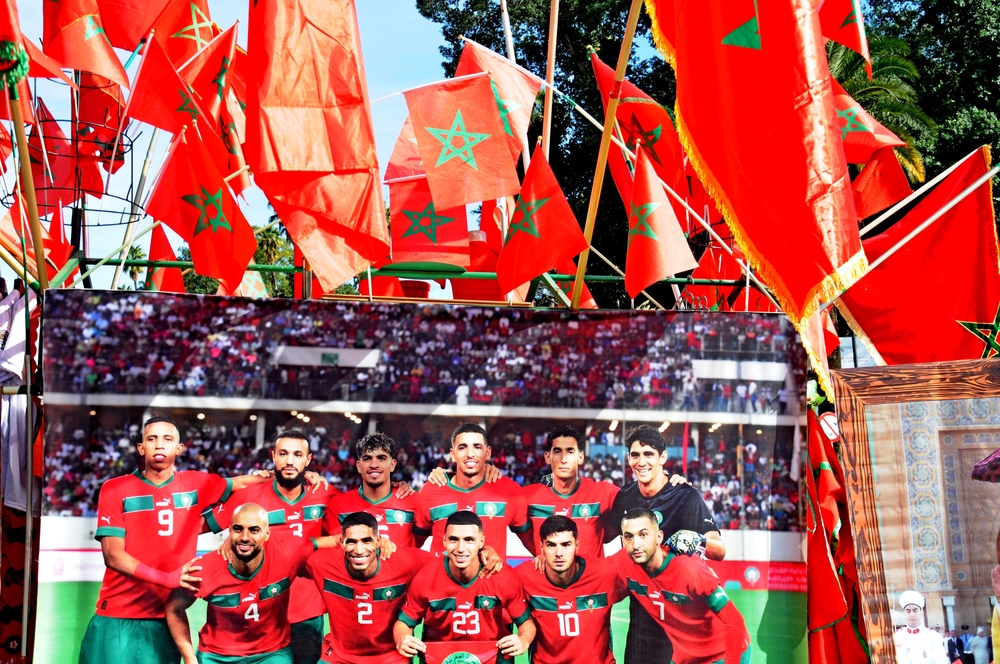
Next comes Monterrey on Tuesday, where the Netherlands await, with Morocco carrying odds of 2.30 on SportyBet Nigeria and 2.19 on Betway South Africa to reach the round of 16.
Maroc Coach Mohamed Ouahbi, speaking after the 4-2 win over Haiti was clear in his determination: “Morocco have entered a new stage. The players now believe in their ability, and opponents respect Morocco. Our objective must be to win the World Cup.”
A win against Holland tomorrow, and Morocco enters the France-or-Spain side of the draw in the last 16. The market is cautious but it is paying attention.
Africa’s Tournament So Far
The expanded 48-team World Cup handed Africa more places than ever before. The bigger question was whether those extra berths would produce genuine progress or simply more participation. The evidence so far points to the former.
Ten African nations entered the tournament. Nine advanced to the knockout stage. One of these, South Africa, which had qualified for the knockout phase for the first time in their history, was eliminated yesterday (Sunday, June 28), losing to Canada. The rest are yet to play.
Perhaps the story of the 2026 competition to date is the astonishing campaign of Cape Verde, who made their World Cup debut and went unbeaten in a group with previous multiple World Cup winners Spain and Uruguay, emerging with two clean sheets.
Ghana, meantime, frustrated England in a goalless draw in their qualifying group, despite conceding almost 79 percent possession of play and facing 19 shots on goal.
The expanded format has undoubtedly created more opportunities. But representation alone does not explain that return. African teams have not merely filled extra places: They have competed, adapted and progressed.
For sportsbooks, that progress has created bigger markets and bigger opportunities.
The expanded 48-team World Cup is expected to become the biggest betting event in history, and this brings more matches, more markets and engagement from fans around the world.
Goal Beyond CAF
Paradoxically, remove every African nation from this tournament and Africa would still shape the outcome.
No country illustrates that better than France. France has won two of the last seven World Cups, finished runners-up twice since 2006 and remains one of the tournament’s perennial contenders.
Of the 26 players in France’s 2026 World Cup squad, 16 have at least one parent or grandparent from an African country.
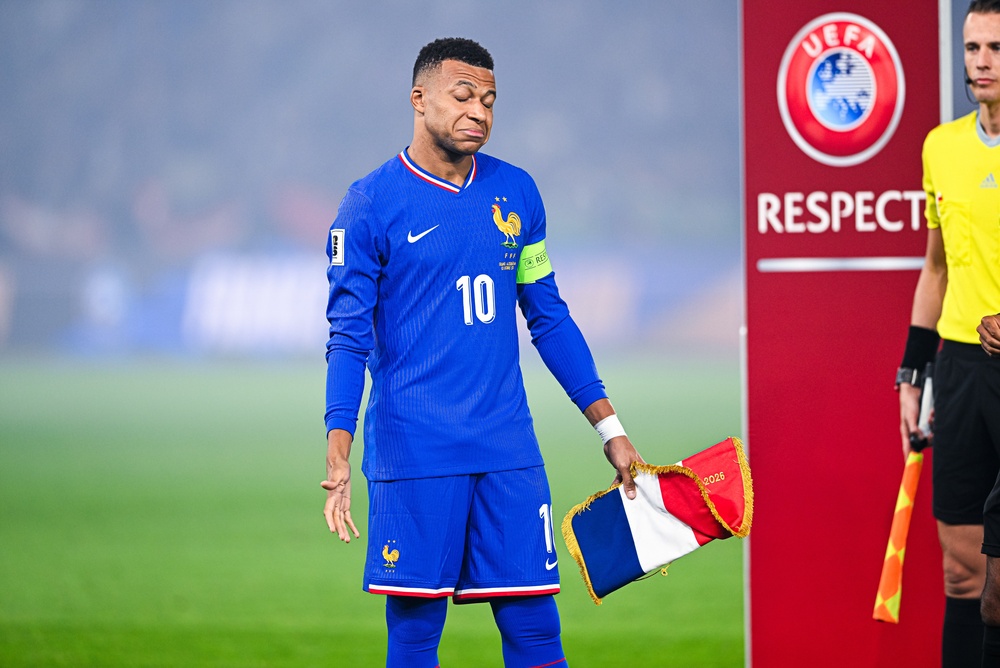
Kylian Mbappé has family roots in Cameroon and Algeria. Ousmane Dembélé’s family roots stretch across Mauritania, Senegal and Mali, while Aurélien Tchouaméni’s parents are from Cameroon.
England, Portugal, Belgium and the Netherlands also rely on players whose families originate from across the African continent.
The continent has become football’s richest talent pipeline, and the teams expected to lift the trophy are the clearest evidence of it. African talent has become woven into the identity of almost every successful footballing nation.
Vinícius Júnior is yet another example. Brazil’s star forward has African roots, and this goes to show that the continent’s influence extends far beyond the teams representing the Confederation of African Football (CAF).
The Market
Although the football conversation around Africa has changed, the betting markets still remain cautious, separating emerging contenders from established champions.
According to Betway, France are the favourites at 4.50, followed by Argentina at 5.00. England and Spain sit at 8.50, while Brazil and Portugal are both at 15.00. Morocco is fixed at 51.00 to win the tournament.
That number shows the respect Morocco has earned, but also the gap bookmakers still see between them and the traditional powers. Their 2022 semi-final run and performances against top teams have changed perceptions, yet bookmakers continue to weigh factors such as squad depth, experience and consistency over an entire tournament.
Winners
Africa is closer than it has ever been to producing its first World Cup winner.
Morocco’s run to the 2022 semi-finals and the performances of African teams at this tournament show that they can compete with the best.
But there is still a difference between reaching the top and staying there long enough to win it.
Africa now has the talent, the belief and the players to challenge.
The next challenge is turning that progress into a trophy.